

Every parent wants their child to succeed in school, especially in foundational subjects like math and science. Yet for many families, homework time turns into a daily struggle frustration, tears, arguments. A child avoids their math worksheet, declares "I can't do this," and looks to you for constant help. You feel helpless, frustrated, worried they're falling behind.
This isn't really about academic difficulty. It's about the emotional conflict that builds up when learning becomes a source of stress. At Asymptode, we believe true learning goes beyond rote memorization it's about building confidence, fostering independence, and turning homework battles into opportunities for genuine understanding. The goal is to take the pressure off you as the "homework enforcer" and help your child become a capable, independent thinker.

Beyond the Textbook: Understanding the Real Homework Battle
The biggest homework battle usually isn't the homework itself it's the emotional conflict around it. When a child consistently avoids math or science, gets visibly frustrated, or constantly asks for the answer, they start to associate the subject with stress or failure. That emotional toll ripples through the whole family.
A simple assignment can quickly escalate: the parent pushes, the child resists, frustration grows, the parent steps in with more help, and the child becomes more dependent. The family ends up spending more time fighting about learning than actually learning. Recognizing this emotional undercurrent rather than just the academic gap is the first step toward changing the pattern.
Quick-Start: 3 Things to Try Tonight
Before the deeper strategies below, here are three small shifts you can try at your very next homework session:
- Swap answers for questions. Instead of showing the solution, ask "What do you understand so far?"
- Pause before helping. Count to ten after your child gets stuck give their brain a chance to work before you step in.
- Praise the struggle, not just the result. Try "I love how you kept working on that" instead of only praising correct answers.
None of these require you to know the subject matter. They just change your role from problem-solver to guide.
Your Role as a Guide: The "Ask, Don't Tell" Strategy
When your child is stuck on a challenging math or science problem, your instinct might be to jump in and show them how to solve it. A more effective, stress-reducing strategy is: don't give the answer ask them to explain their thinking. This shifts your role from problem-solver to facilitator, helping your child build critical thinking skills without you needing to be an expert in the subject.
Three simple, actionable steps to use at home:
- "What do you understand so far?" Helps your child articulate what they know and shows you their starting point.
- "Why did you choose that approach?" Encourages reflection on their reasoning rather than just the outcome, and can reveal misconceptions.
- Ask them to draw it, explain it in their own words, or try a simpler example. Rephrasing or visualizing a problem often unlocks understanding, and a simpler version builds confidence before tackling the full one.
Then let them attempt the problem again before stepping in further. Your job isn't to be the expert with all the answers it's to help your child become the thinker who can find them.
Home vs. Classroom: Creating a Calm Learning Space
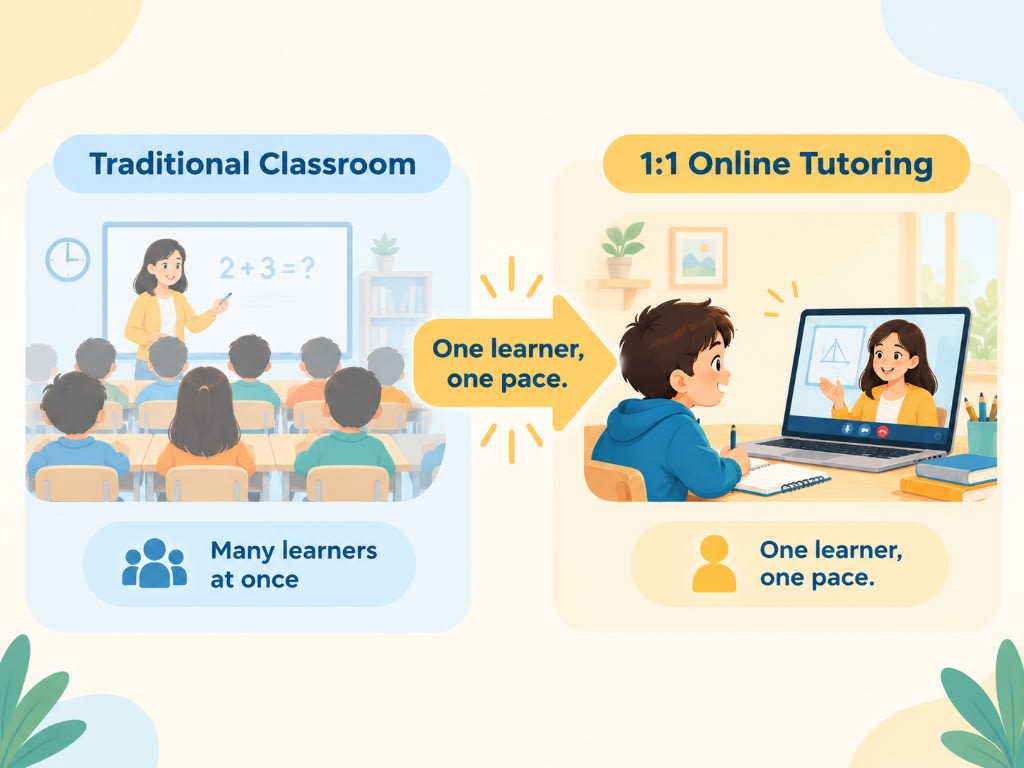
Many well-meaning parents try to recreate a classroom at home sitting directly over a child, repeating the same explanation, correcting every mistake immediately, pushing them to finish fast. It feels like diligent support, but it often increases stress and makes math or science feel like pressure rather than learning.
Instead, try a "support, don't take over" approach:
- Ask guiding questions. "What do you understand so far?" or "Which part feels confusing?" invites your child to engage on their own terms.
- Give them time to think. Resist the urge to fill silences or jump in with solutions — learning often happens in the quiet moments of struggle.
- Break it down. If they're truly stuck, help them take one smaller step rather than showing the whole solution.
A low-pressure environment helps your child build a positive relationship with learning and take real ownership of it.
Cultivating Resilience: The Key to Lasting Learning
Beyond finishing homework or understanding one concept, the most valuable thing you can help your child build is resilience — the belief that struggling is a normal, necessary part of learning, not proof they can't do it.
At home, you can reinforce this by:
- Praising effort and persistence, not just correct answers: "I love how you kept working on that tough problem!"
- Framing challenges as shared problem-solving: "Let's figure out where you're stuck together" instead of "Let me show you how."
- Normalizing struggle. Let your child know everyone struggles with new concepts it's a sign they're learning, not failing.
Professional tutoring provides expert teaching and targeted diagnosis of learning gaps. Parents, through everyday home support, reinforce the mindset of resilience between sessions. When both work together, a child gradually learns to stay with hard problems, learn from mistakes without judgment, and try again independently. The goal isn't a child who never gets stuck it's a child who knows what to do when they do.
Partnering for Success: Asymptode's Approach

At Asymptode, we take a holistic approach to learning. Our 1:1 online math and science tutoring is paced to your child's unique stage, giving them the personalized attention they need to genuinely understand concepts not just memorize them. We help build a strong foundation so your child can catch up, get ahead, and feel confident in school.
Combine these home strategies with Asymptode's expert tutoring, and you get a powerful support system: less family stress, a more resilient child, and a deeper, lasting understanding of math and science.
Ready to transform homework battles into learning victories? Explore how Asymptode can partner with your family today. Visit asymptode.com to learn more.