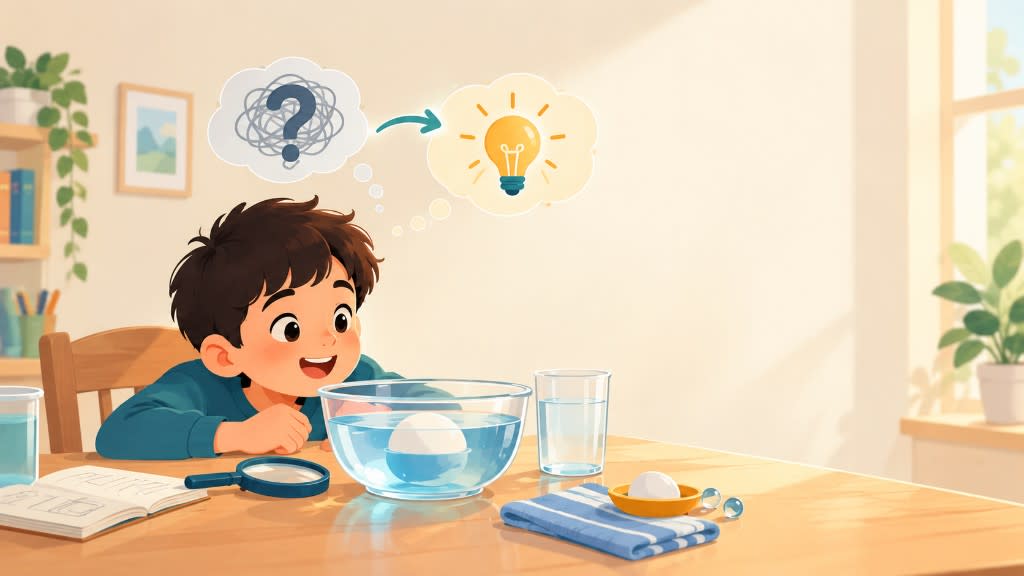
The class ends.The learning doesn't.
Every class adds to your child's learning record. What was taught. What they understood. What to practise next. And where their mentor starts the following lesson.
What happens after the class?
An hour with a good mentor is worth a lot. But for most tutoring, when the call ends, everything from it ends too. The next class starts from nothing.
Most tutoring
You get a recording link, maybe. If you want to know whether your child is improving, all you have to go on is how the class felt.
At Asymptode
Every class leaves a record, and the next class is built on it. So when you ask how your child is doing, there is a real answer.
What happens after one class
Six steps, in the order they happen. Each one leads to the next, and the last one leads back to the first.
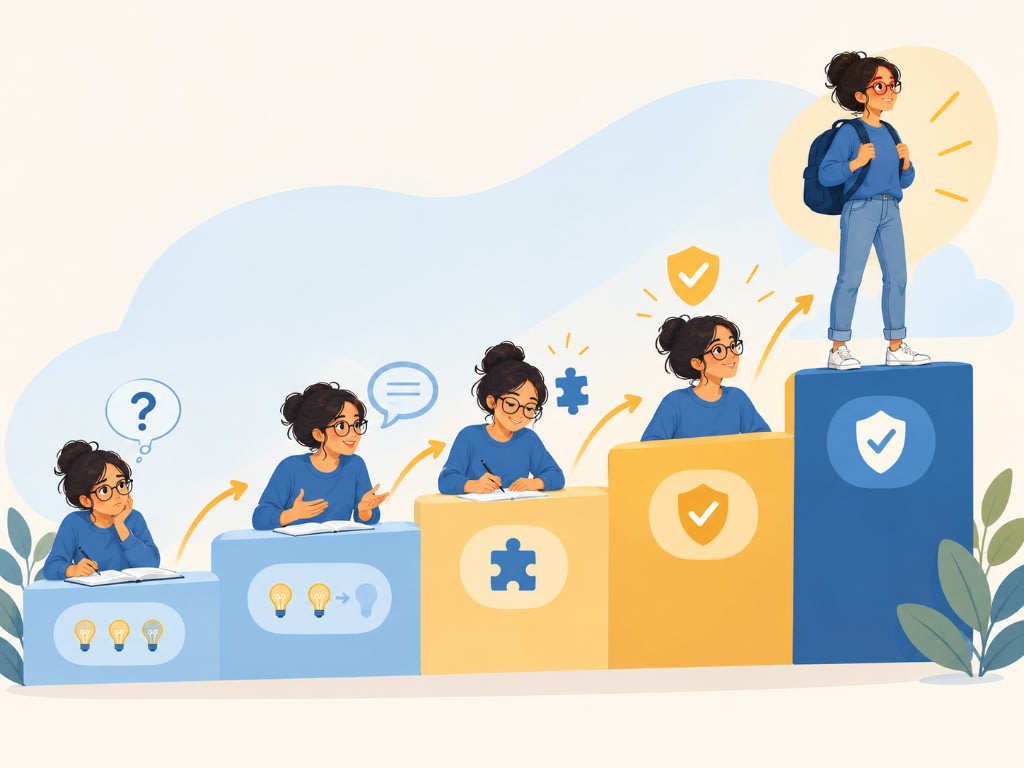
Class
Your child has their live one-to-one lesson. When it ends, the class comes into Asymptode automatically. Nobody has to remember to save anything.
Understand
We write down what was taught — the topics covered, the ideas behind them, and the questions your child worked through.
Practise
Rolling outYour child gets practice on the topics that need work, not a general worksheet for the whole chapter. There is no answer key to look at, so the first attempt is really theirs.
Measure
Rolling outWe look at how they did. Which questions they got right, which they got wrong, and how they worked through them. Measured, not guessed at.
Improve
Rolling outWhen an answer is wrong, we look at why. Which step went wrong, not just the final mark. So the explanation your child gets back is about what they actually missed.
Next class
Their mentor starts the next lesson already knowing which topics are solid, which are weak, and what to cover first.
And that class starts the loop again.
What this looks like after one class
One Tuesday, followed all the way through to what the mentor does next lesson.
After today's class
Tuesday · Science · Grade 8
What was taught
Circulatory System
- How blood carries oxygen
- Arteries and veins
- Blood flow through the heart
How your child is doing
- Circulatory SystemUnderstood
- RespirationNeeds more practice
Practice after the class
Three questions on respiration, the topic that needed more work.
- Question 1Correct
- Question 2Correct
- Question 3Needs another explanation
For the mentor, next lesson
Start with respiration. The circulatory system is solid.
Illustrative example, not a real student's record: the topics and results are made up.
Don't just get the recording.Find the learning inside it.
A recording is an hour long, and your child will not sit through it again. But the two minutes where a topic was explained — they will watch that. So Asymptode is building a way to search your child's classes by topic and jump straight to the minute it was taught.
It is built. We are finishing it before we hand it to families. When it is ready, you will find it in the parent section of your dashboard.
circulatory
Illustrative exampleAn example of the screen, using made-up classes.
One learning journey. Three people who stay connected.
One record, answering the question each person is asking.
For your child
Know what to work on next.
Practice is based on what your child has been taught and how they did. So the time they spend on it is time well spent, not a chapter they already know.
For the mentor
Know where to focus next.
Strong topics, weak topics, and how the homework went. Your child's mentor starts the lesson knowing where they are, instead of spending the first ten minutes finding out.
For you
See how your child is doing.
A progress report written for parents: what was taught, what is solid, and what needs more practice. It is built, and we are getting it ready for families now.
You shouldn't have to wonder what happened in your child's class.
You should not have to sit in on the class. And “good class today” is not really an answer. A clear picture of what your child is learning is a fair thing to expect.
This is about seeing the learning, not watching your child. There is no score and no ranking, and nothing for them to feel watched by. Just an honest account of where they are and what comes next.
In your parent dashboard
Rolling out- What was actually taught, class by class
- Which topics are solid, and which need more practice
- What your child was given to practise, and how it went
- What their mentor will focus on next lesson
The parent progress report is built, and we are getting it ready for families. Until then, ask your child's mentor. They work from the same record.
Every class should make the next one better
Learning is not a set of separate hours. What happened yesterday should shape what happens tomorrow. That is what we are building around every child we teach.