

For parents navigating their child's academic journey, platforms like Google Classroom have become indispensable. They streamline assignments, keep communication organized, and make homework easy to track. But for the parent of a child who's struggling, a different question tends to surface: is staying organized enough to actually build understanding and confidence in subjects like math and science?
Google Classroom is excellent at managing the logistics of learning. It isn't built to diagnose why one specific child keeps getting stuck. That's a different kind of problem, and it's where personalized 1:1 tutoring comes in.
A quick note up front: this isn't about replacing Google Classroom or working around it. It's about what happens in the gap the platform was never designed to fill the part where a child needs someone to notice why they're stuck, not just that they're stuck.
Google Classroom's strengths and where they run out
Google Classroom genuinely simplifies a lot: sharing resources, submitting homework, tracking deadlines. For many students, that structure is enough.
But if a child is already falling behind, the limits show up quickly. A student might submit the same type of incorrect answer three or four times in a row. Google Classroom can return a corrected answer or a teacher's comment but it has no way of knowing why the mistake keeps happening. Is it a missing prerequisite? A misconception that's gone unnoticed? Simple confusion about how the question is worded? The platform isn't built to tell these apart.
Take a child struggling with algebra. They get questions wrong, see the corrections, and still don't grasp the underlying principle the next time it comes up. That's not a content problem the content was right there. It's that nothing adapted: not the explanation, not the pace, not the level of challenge, not the way the question was asked.
The real gap: diagnosis and adaptation
Google Classroom can deliver content efficiently that was never really the issue. The deeper gap is in diagnosis and adaptation: noticing why a student is stuck and changing course in response.
This is where a human tutor does something a platform structurally can't. A tutor can notice hesitation. They can ask, "What made you choose that approach?" and actually hear the misconception behind the wrong answer. They can shift the explanation on the spot a different example, a different diagram, a slower pace until it clicks. And they can check, in real time, that the student can now do it alone.
Google Classroom manages the learning journey. A 1:1 tutor makes that journey responsive to the child actually going through it.
How Asymptode tutors work with Google Classroom, not around it
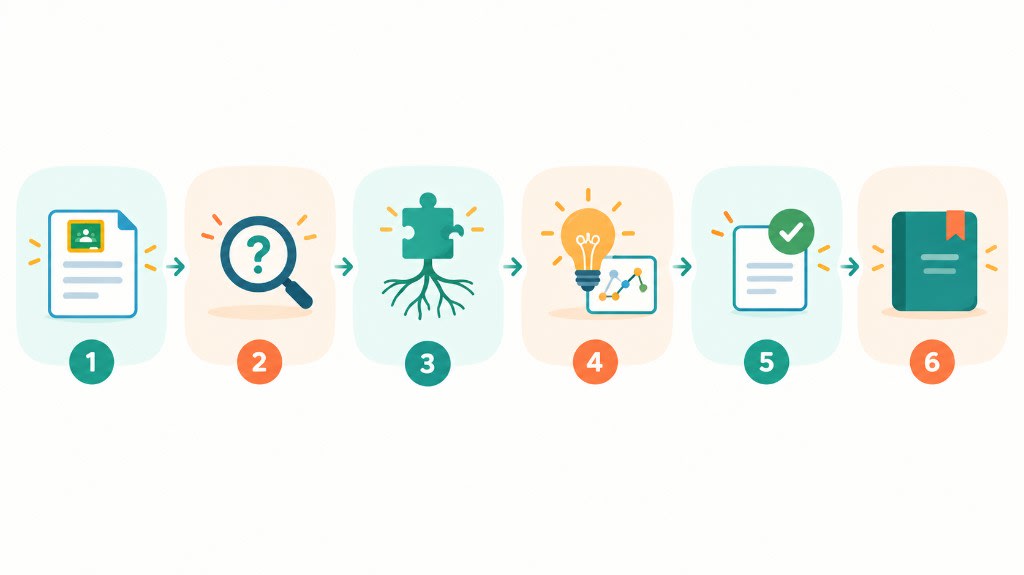
One of the first questions parents ask is how outside tutoring fits into a child's existing school routine. The answer, for Asymptode, is that it doesn't compete with Google Classroom it works from it. Tutors treat the Classroom feed as the student's existing learning map rather than introducing a second, separate curriculum.
In practice, that looks like:
- Review the assignment the actual questions, instructions, resources, and teacher expectations posted in Google Classroom.
- Identify where the student is getting stuck not just help them finish the assignment, but find the exact point of difficulty.
- Trace it to the root cause if needed, follow the difficulty back to a missing concept or prerequisite gap.
- Reteach and reinforce using diagrams, relatable examples, targeted questions, and guided practice built around that specific gap.
- Apply it independently the student goes back to the original Classroom assignment and works through it using the new understanding.
- Record the insight so the next session builds on exactly where this one left off, instead of starting over.
The tutor stays aligned with the child's actual schoolwork. What gets added is the piece Classroom was never meant to provide: individual diagnosis, adaptive teaching, and feedback that happens in the moment.
Beyond the algorithm: why the human part matters
Google Classroom's tools organization, communication, even some AI-driven personalization are useful. But organizing a student's work is a different thing from understanding how that student thinks.
A tutor can notice hesitation, frustration, or a flicker of lost confidence, and respond immediately draw a different diagram, slow down, rephrase the question. Just as importantly, a tutor can tell the difference between a child who genuinely doesn't know something and a child who knows it but is afraid to commit to an answer. No platform makes that distinction.
And rather than placing a student on a fixed path, a tutor adapts continuously session to session, sometimes question to question to how that particular child is thinking that day.
A closer look: the Grade 8 physics example
Here's a hypothetical example of how this plays out.
A Grade 8 student was working through a Google Classroom physics assignment on forces. They could recall the relevant formulas without trouble and solved familiar problems correctly. But whenever a question described a situation in words rather than handing them a diagram, they consistently reached for the wrong equation.
In the 1:1 session, the tutor didn't walk through the assignment answers directly. Instead, they asked the student to draw the forces acting on the object, describe what was physically happening, and predict the direction of motion before choosing any equation. That revealed the actual gap: it wasn't a formula problem at all. The student struggled to translate a written physical situation into a mental picture of what was going on.
After working through a few deliberately varied examples focused on that translation step, the student went back to the original Classroom assignment. They solved the unfamiliar questions with noticeably fewer prompts. The shift wasn't just in accuracy it was in the question they were asking themselves. From "Which formula do I use?" to "What's actually happening here, and what principle explains it?"
The takeaway
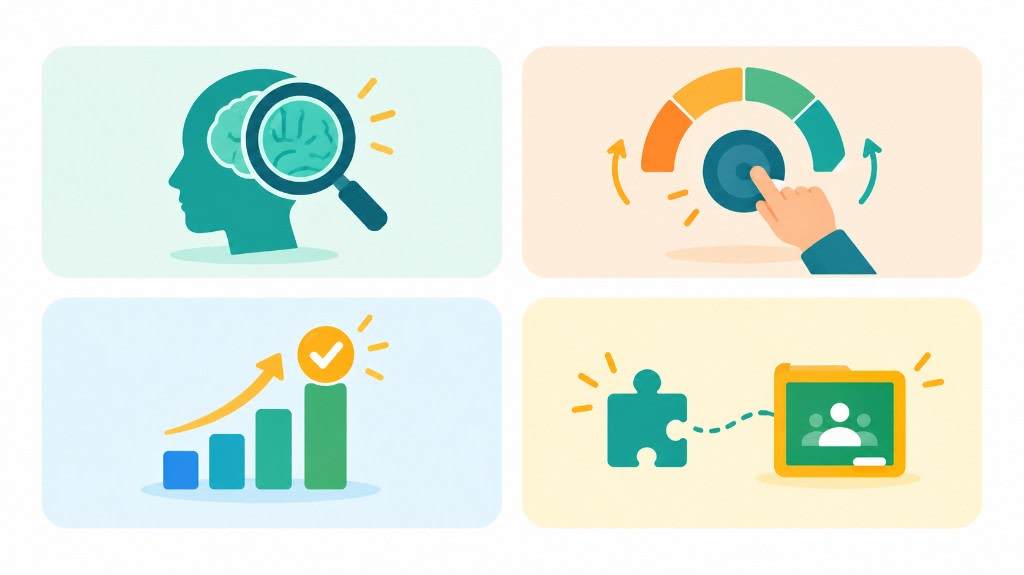
Google Classroom is a strong tool for managing the mechanics of school assignments, deadlines, communication. But for a student who's genuinely struggling, that structure alone often can't close the gap between seeing the material and understanding it.
Asymptode's 1:1 tutoring is built to work inside that gap:
- Diagnose root causes find out why a student is stuck, not just what they got wrong
- Adapt in real time adjust explanations, pace, and difficulty to the individual student
- Build real confidence help students apply concepts independently, not just get through the next assignment
- Integrate with schoolwork align directly with what's already happening in Google Classroom, rather than adding a second, separate curriculum
If you want your child to move from "getting through" their Google Classroom assignments to actually understanding what's behind them, that's the clarity 1:1 tutoring is built to provide.
Explore Asymptode's personalized 1:1 online math and science tutoring at asymptode.com.