

Most families juggling school, homework, sports, and other commitments are already stretched thin, and parents are usually coordinating all of it around their own work schedules. Adding another fixed activity even one as important as tutoring can feel like one more thing to manage rather than a source of relief. The real question for most families isn't whether their child needs support, but whether that support can fit into a schedule that's already full without adding friction.
Fitting Into a Chaotic Schedule
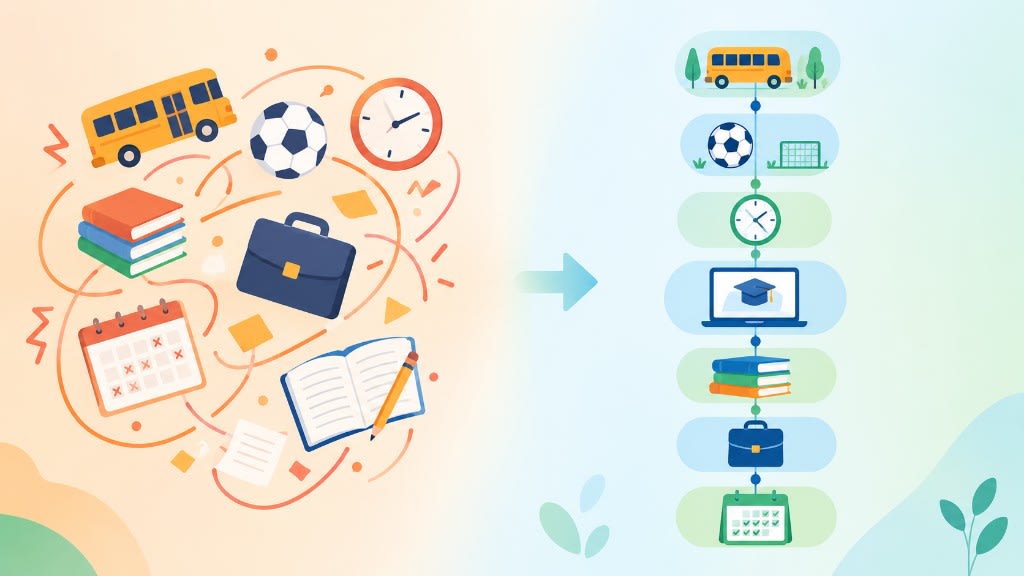
A common situation is a child already juggling school, homework, sports, and family commitments, while the parent is trying to coordinate everything around work. Adding another fixed activity can feel like one more thing to manage. With flexible 1:1 online tutoring, sessions can be planned around the child's existing routine, and there is no travel time or commute between school and tutoring. The tutor can also focus directly on the child's highest-priority gap rather than adding hours of generic homework. The idea is not to fill more of the family's calendar; it is to make the limited learning time more purposeful and easier to manage.
Beyond Quick Fixes: What Lasting Understanding Looks Like
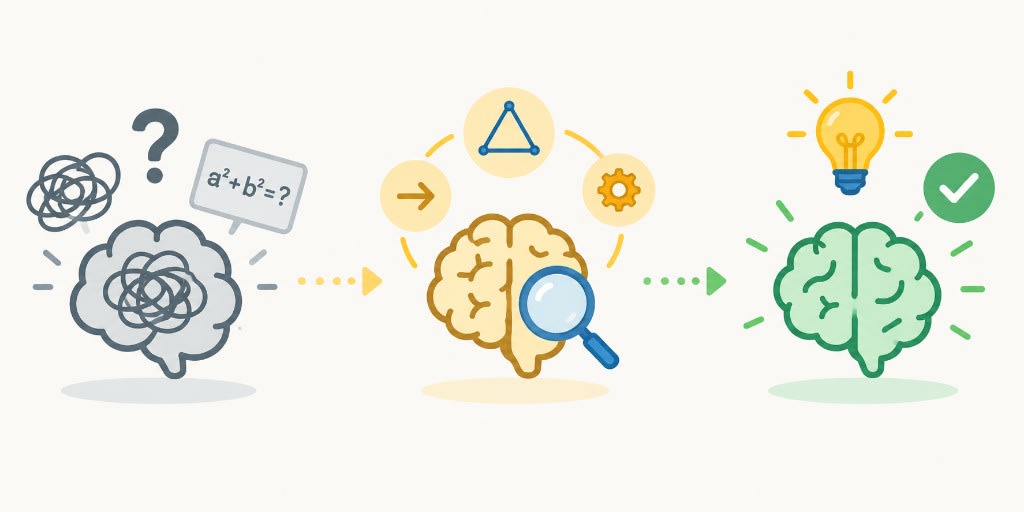
Lasting understanding means a student can explain a concept in their own words, connect it to what they already know, and use it when the question looks unfamiliar not simply remember a formula for the next test. For example, a student struggling with Physics might memorize several equations but freeze when the problem is presented differently. In 1:1 tutoring, the tutor can slow down, identify that the real gap is understanding the physical situation, and use diagrams, questions, and simpler examples before returning to the harder problem. As the student improves, the tutor removes the support and tests new variations. The turning point is when the student stops asking, "Which formula do I use?" and starts saying, "Let me first figure out what is happening." That is the difference between catching up temporarily and building knowledge that lasts.
The Emotional Shift
A common emotional shift is that parents move from feeling helpless and responsible for fixing every academic struggle to feeling that someone finally understands what is actually going wrong. For example, a parent may begin by saying, "Every evening ends with an argument over Maths homework." After targeted 1:1 support identifies the underlying gap and the child starts working more independently, the parent no longer has to sit beside them, explain every question, or become the enforcer. The relief is not just a better grade it is getting back a calmer relationship at home. The best outcome is when tutoring gives parents their role back as parents, rather than making them feel like their child's second teacher.
Why "Always-On" Isn't the Same as Effective
The drawback of "always-on" tutoring is that it can optimize for getting help in the moment rather than building understanding over time. A student may get an answer at 9 p.m., but a drop-in tutor may not know their history, recurring misconceptions, or how they learn best. Structured flexibility keeps the convenience of online learning while giving the child consistency with a dedicated tutor, a clear learning path, and pacing that changes as the student develops. The tutor remembers what was difficult, builds on previous sessions, and gradually removes support so the student becomes independent. For deep learning, flexibility should mean fitting tutoring into the family's life not making the learning itself random or inconsistent.
Closing Thought
Taken together, these patterns point to the same underlying need: families aren't looking for one more obligation to schedule around, and they aren't looking for a quick fix that fades by the next test. What tends to work is support that adapts to the family's existing rhythm, targets the actual gap in understanding rather than symptoms of it, and stays consistent enough for a tutor to build real context over time. That combination logistical ease paired with depth is what separates lasting academic progress from a temporary patch.