
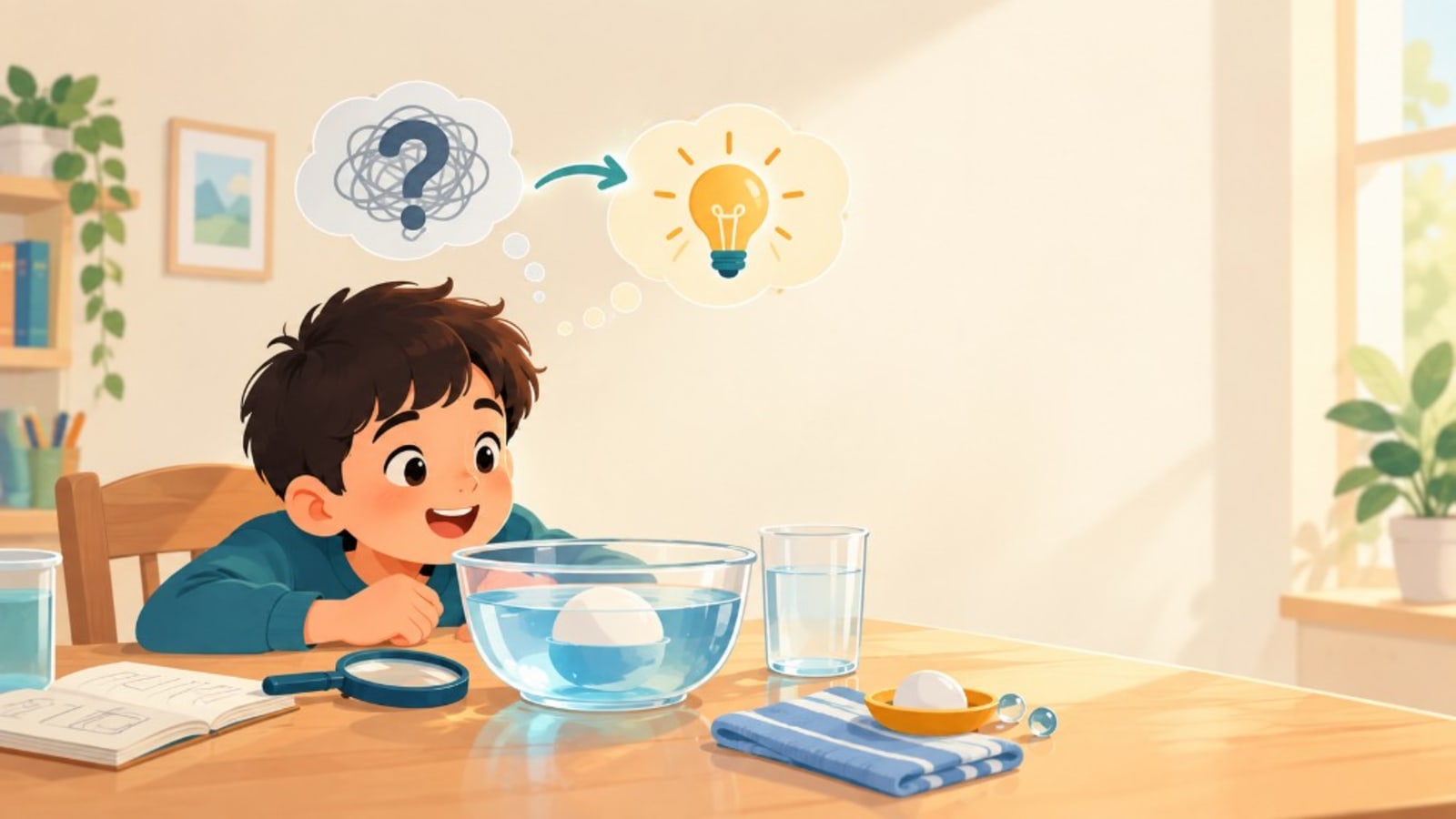
For many parents, seeing their child struggle with science can be heartbreaking. The furrowed brows, the sighs of frustration, the declarations of "I'm just not good at it" — these are common refrains when young learners feel overwhelmed by the complexities of the scientific world. But what if there were simple, effective teaching strategies that could transform that anxiety into genuine confidence and spark a lifelong love for discovery?
At Asymptode, we understand these challenges. Our goal is to help your child not just memorize facts, but to truly understand math and science, building a strong foundation and regaining their confidence. This post will explore practical, parent-friendly approaches to make science engaging and accessible, turning struggles into triumphs.
The Quiet Shift from Anxiety to Confidence
When a new teaching strategy finally "clicks" for a young learner who has been struggling with science, the biggest shift we see is the quiet move from anxiety and avoidance to genuine confidence. Before that breakthrough, science often feels confusing and overwhelming. Students shut down, dread the subject, and start believing they're "just not good at it."
But after that moment of clarity, their posture changes: they lean in, ask questions, and begin to trust that they can understand. That single breakthrough often restores their willingness to engage and gently opens the door to real curiosity and long-term confidence in STEM. It's not about sudden perfection, but about the profound internal shift from fear to self-belief.
Practical Strategy: Predict–Test–Notice
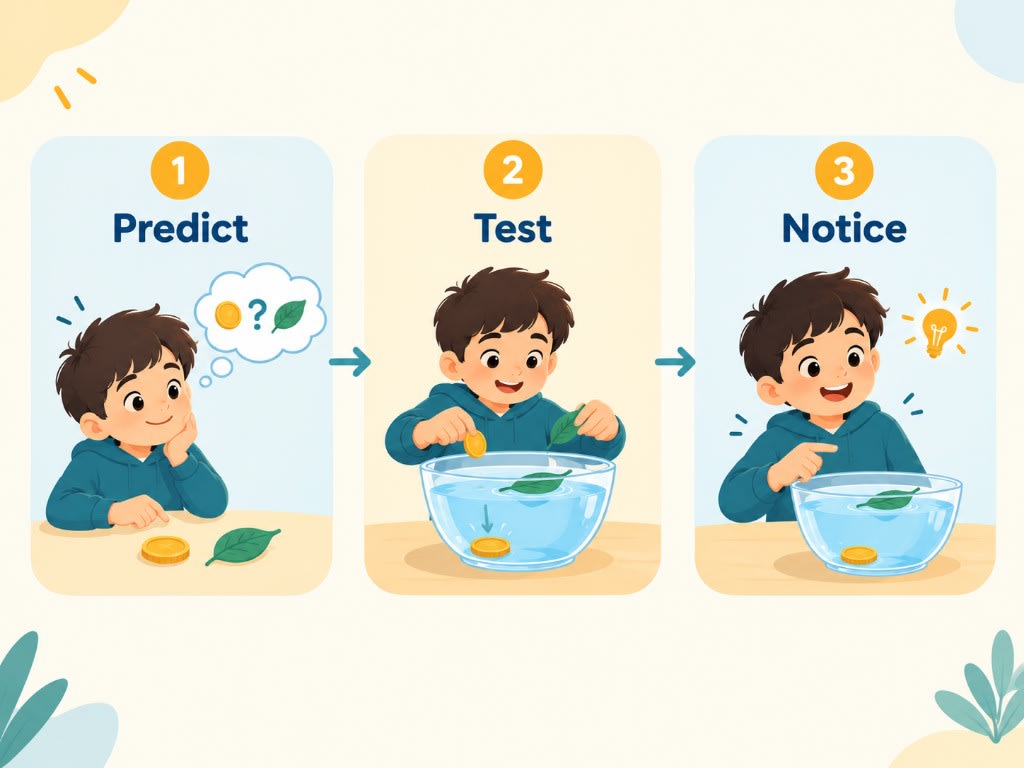
One of the most powerful and practical science activities to consistently boost both confidence and curiosity in young children is the "Predict–Test–Notice" method, especially with everyday objects in water (like a sink or float experiment).
Here's how it works:
- Predict — The child predicts whether each item will sink or float.
- Test — They then test their prediction by placing the item in water.
- Notice — Finally, they describe what actually happened.
What makes this uniquely effective for science? It removes the fear of being "wrong" because the water itself gives clear, non-judgmental feedback. The physical world answers directly, turning science into something the child can control and see, building real confidence. Unlike general teaching, where an adult might provide the "right" answer, this method allows the child to discover it for themselves, creating curiosity that feels personal and lasting. It's a hands-on approach that empowers them to be the scientist.
Re-igniting Curiosity When Science Isn't for Them
For a parent whose child has already decided "science isn't for me," the key is to re-ignite their natural curiosity and make science feel approachable again. Our go-to strategy starts with zero pressure: simply notice something everyday together.
For example, you might say, "Look how the ice in your drink is melting — what do you think is happening?" Invite a tiny prediction, then test it right away with something safe and visible. The crucial step is to celebrate the observation itself, not the "right" answer. When the child sees the world respond to their own idea, the old belief that science is too hard or not for them begins to crack. That small, private "I noticed that" moment is often enough to reopen the door to curiosity, making science feel like a personal exploration rather than a daunting subject.
Avoiding Common Mistakes: Explaining vs. Exploring
A common misconception or ineffective approach parents often take when trying to help their child with science is rushing to explain the "right answer" or correcting the child immediately. While well-intentioned, this often shuts down curiosity and reinforces the feeling that science is about being right, rather than about discovery.
A more productive, experience-backed alternative is to pause, ask what they notice or think, and explore their idea together. When children feel their thinking is valued, they stay open and start building real confidence in their own observational and reasoning abilities. Science grows best from questions and observations, not from quick corrections. It's about fostering a mindset of inquiry, where every question is an opportunity to learn.
Key Takeaways
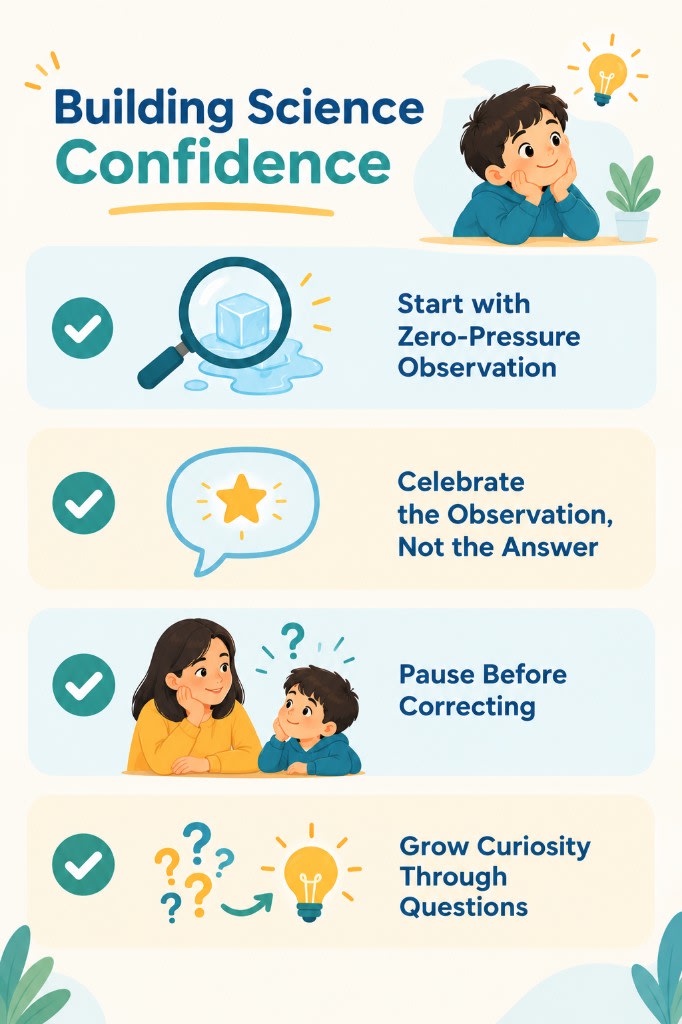
Building confidence and curiosity in science for young learners isn't about memorizing complex formulas or acing tests. It's about creating an environment where they feel safe to explore, predict, and discover. By embracing strategies like Predict–Test–Notice, starting with zero-pressure observations, and prioritizing exploration over immediate correction, you can help your child transform their relationship with science.
At Asymptode, we specialize in providing personalized 1:1 online math and science tutoring, paced to your child's stage. Our expert tutors empower children to genuinely understand these subjects, building the strong foundation and confidence they need for future success. If your child is struggling, consider how a dedicated mentor can make all the difference. Visit asymptode.com to learn more.