

As a parent, you want your child to thrive academically, especially in critical subjects like math and science. But what happens when those subjects become a source of dread rather than discovery? Many parents hear the term "student enrichment services" and immediately think of university-level academic support or general study skills. While those services are valuable for older students, K-12 student enrichment is a fundamentally different, and profoundly impactful, journey.
At Asymptode, we believe that true enrichment for K-12 students in math and science is about far more than just improving grades or preparing for the next test. It's about building deeper thinking, fostering genuine curiosity, and establishing strong, lasting foundations that empower a child to become a confident, independent learner. It's about reigniting the spark.
What K-12 Student Enrichment Truly Means
For K-12, enrichment in Maths and Science is about building deeper thinking, curiosity, and strong foundations, not simply helping a student navigate a course or prepare for university-level work. We take concepts the child is already learning and go deeper asking "why," exploring multiple ways to solve a problem, testing ideas, and applying concepts to unfamiliar situations. For example, instead of only practicing a Physics formula, we might ask the student to predict what will happen, draw the situation, explain the principle, and then solve a new variation.
University support often focuses on helping students manage advanced coursework, research, or academic requirements; K-12 enrichment is more foundational and developmental. The outcome is a child who does not just know more Maths or Science, but becomes more curious, confident, and capable of figuring things out independently.
From "I Don't Know" to "What If?": A Story of Transformation
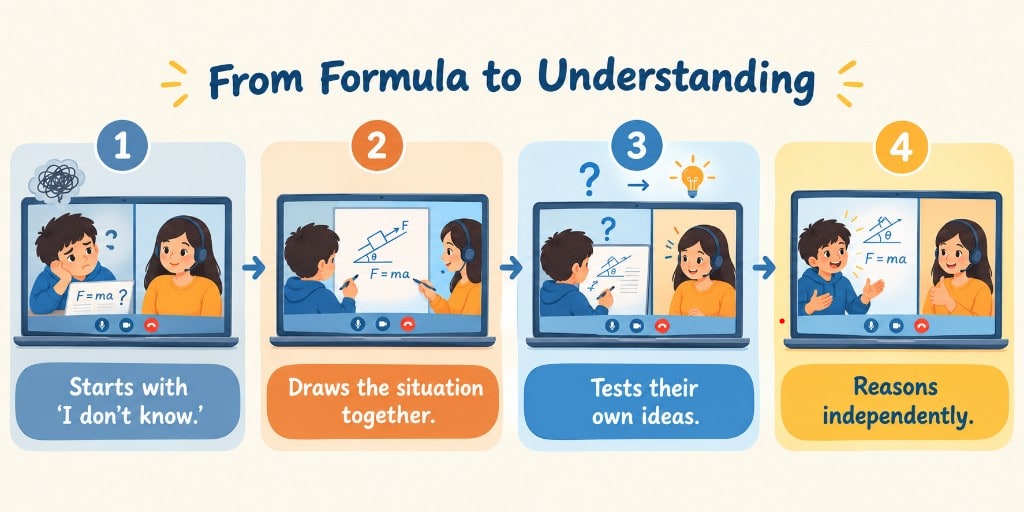
A representative example is a student who would look at a Physics problem and immediately say, "I don't know," before even trying. The student had learned formulas but had little confidence that they could actually reason through a problem. The tutor stopped starting with equations and instead used diagrams, simple predictions, and questions like, "What is physically happening here?"
The turning point came when the student began drawing the situation before asking for a formula, then started testing their own ideas and noticing when they were wrong. Over time, "I don't like Physics" became, "Wait, what if I try it this way?" That shift from avoiding the problem to being curious about it is what genuine engagement looks like.
Unlocking "Aha!" Moments: The Power of Personalized Tutoring
One common "aha!" moment in Maths is when a student realizes that the equals sign does not mean "now calculate the answer," but means both sides have the same value. In Physics, a student may memorize formulas but not understand what current, force, or acceleration actually represents physically.
In a classroom, there may not be enough time to uncover the individual misconception; the student can simply keep applying the wrong mental model. In 1:1 tutoring, the tutor can listen to the student's reasoning, ask targeted questions, change the explanation or representation immediately, and test the idea with a new problem. The breakthrough happens when the student doesn't just get the answer they understand why their old thinking was wrong and can now reason independently.
Beyond Grades: Measuring a Love for Learning
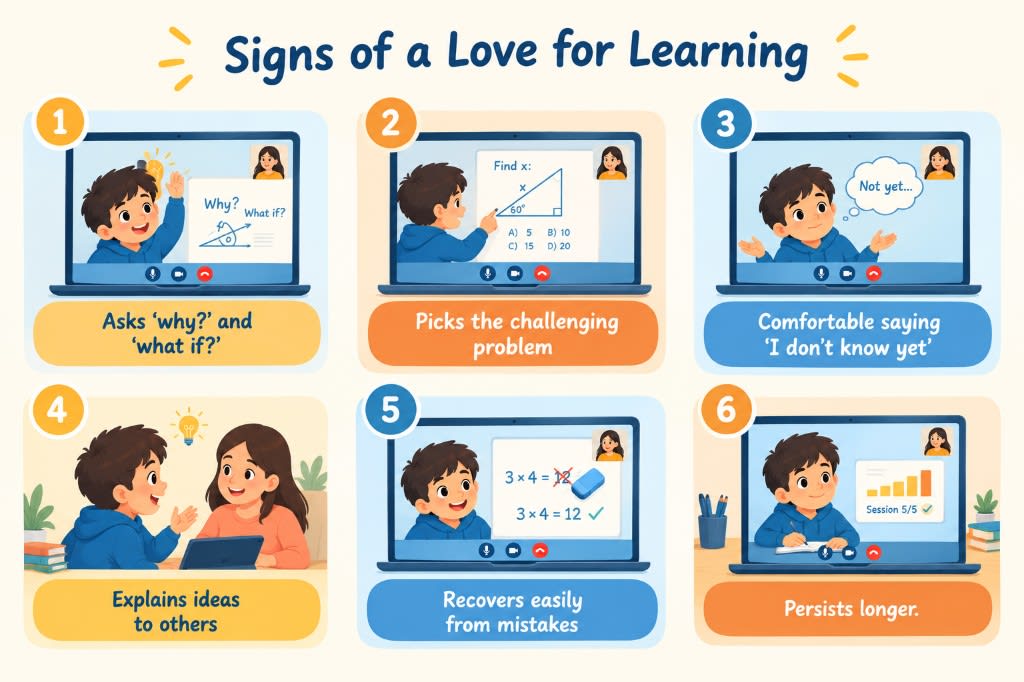
A true love for learning shows up when a child starts engaging with Maths or Science without being pushed to do so. They ask "why?" and "what if?", explore different ways to solve a problem, choose a harder question out of curiosity, and become comfortable saying, "I don't know yet let me figure it out."
We also look for less obvious changes: they persist longer, ask better questions, explain ideas to others, and recover more easily from mistakes. Over time, this can influence how confidently they approach other subjects and whether they see Maths or Science as something they can do rather than something to avoid. The lasting impact is not simply higher marks; it is a child who becomes curious, confident, and willing to keep learning long after the tutoring ends.
Key Takeaways
- K-12 Enrichment is Foundational: It's about deep understanding, not just coursework management.
- Personalized Approach Transforms: 1:1 tutoring addresses individual misconceptions and fosters genuine engagement.
- Love for Learning is Measurable: Look for curiosity, persistence, and independent reasoning, not just grades.
- Lasting Impact: Confident, curious learners are set up for lifelong success.
Ready to see your child rediscover the joy of learning math and science? Explore Asymptode's personalized 1:1 online tutoring and watch them transform from dread to genuine excitement. Visit asymptode.com to learn more.