
As a parent, you dream of your child stepping into high school with confidence ready to build on a strong foundation. But the transition can feel like stepping onto a faster, more complex academic treadmill, especially in math and science. Many parents worry their child is carrying hidden gaps from middle school small misunderstandings that quietly grow into real obstacles.
This article looks at why those gaps matter, why catching them early is critical, and how a genuinely diagnostic approach to tutoring can change the trajectory entirely.
The Silent Struggle: How Middle School Gaps Become High School Hurdles
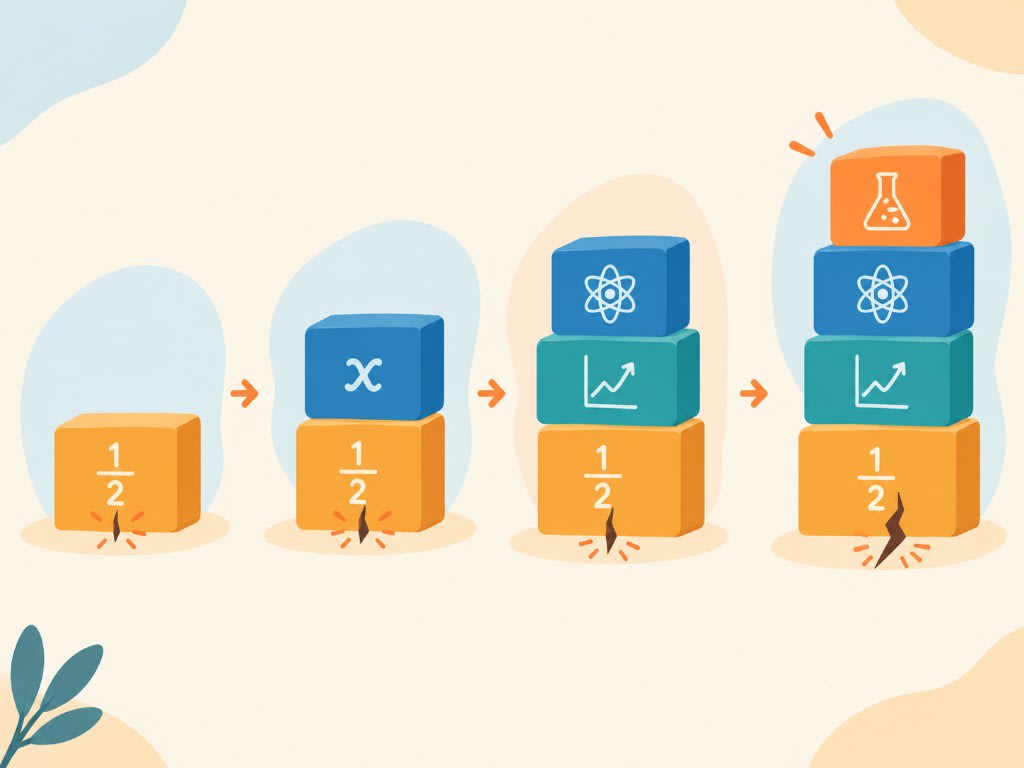
It's a familiar pattern: a small middle-school gap becomes a bottleneck once high-school concepts start building on top of it. A student might have learned algebraic manipulation as a set of rules without ever really understanding fractions, negative numbers, or what an equation actually represents. In high school, those same ideas resurface inside functions, equations, physics, and chemistry. Suddenly, the struggle spreads across multiple subjects at once.
Because the original gap is invisible, the student often draws the wrong conclusion: "High-school math is just too hard for me." They start avoiding unfamiliar problems. More practice on the new material rarely helps, because the missing foundation is still sitting underneath it.
The better approach is to trace the struggle backward, repair the foundational concept, and reconnect it to the current topic before one small misunderstanding hardens into a belief that they simply "aren't good at math or science."
Why Early Intervention Matters: The Critical Window Before High School
Math and science are cumulative subjects new concepts almost always depend on skills learned earlier. That makes gaps in fractions, proportional reasoning, algebra, graph interpretation, or scientific reasoning much harder to hide as the curriculum accelerates.
Left unaddressed, students spend high school compensating: memorizing procedures, avoiding unfamiliar problems, needing more and more help just to keep pace. Over time, this erodes confidence and can quietly influence which advanced courses a student even believes they're capable of attempting.
Proactive diagnosis and remediation, before gaps compound, changes that story. The goal isn't just readiness for next year's grade it's making sure an early gap doesn't get to decide what a child believes they can achieve later.
Beyond "Personalized Curriculum": A Diagnostic Approach
Plenty of programs including online high schools talk about "personalized instruction." But personalization that starts with content selection is different from personalization that starts with diagnosis.
A broad personalized curriculum can adjust the difficulty or sequence of lessons. A dedicated 1:1 tutor can go further investigating why a student is struggling and tracing it back to its root. If a student is struggling with high-school physics, the real issue might not be physics at all. It could be weak proportional reasoning, graph interpretation, or difficulty translating word problems into a physical model.
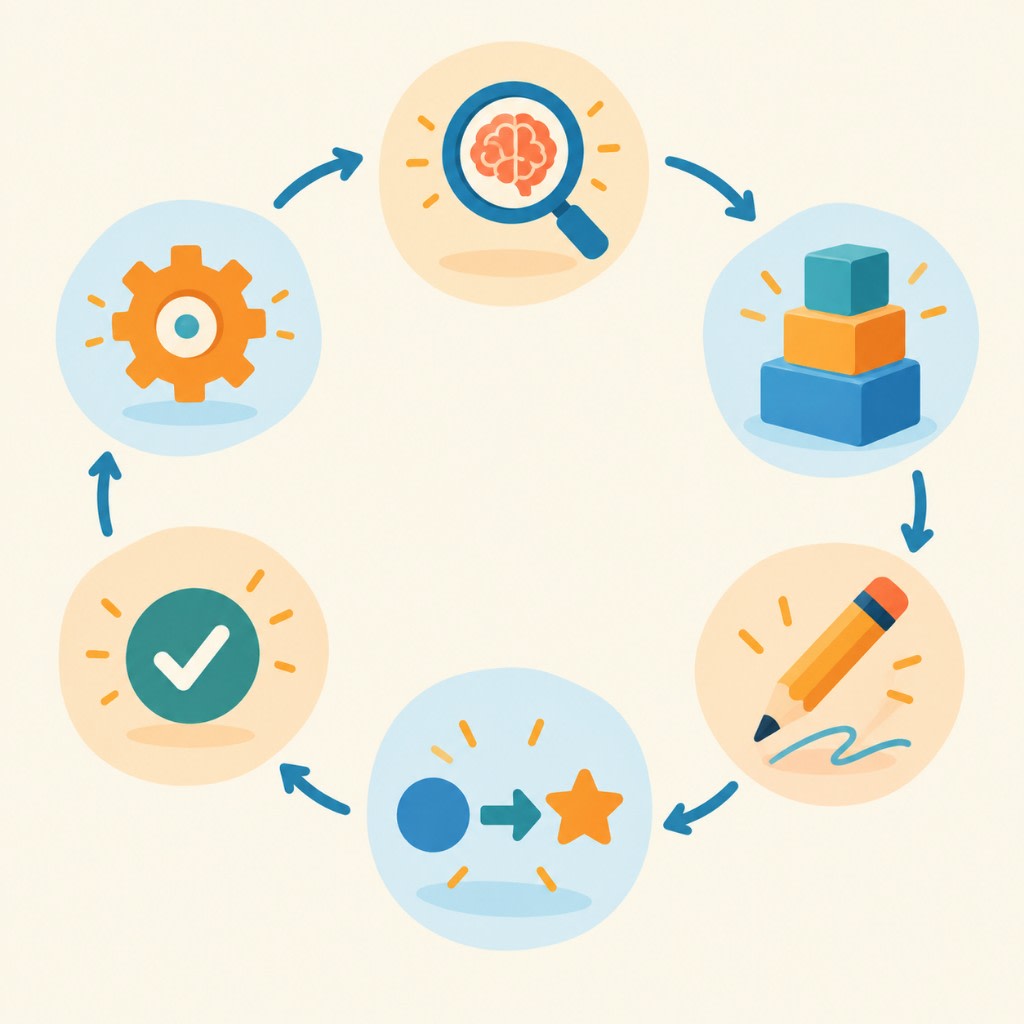
From there, a tutor follows an iterative loop: diagnose → rebuild the prerequisite → practice → test transfer → reassess → adjust. If the student is still stuck, the tutor changes the explanation or goes a level deeper rather than simply assigning more questions.
That's the real distinction between a personalized curriculum and personalized teaching: a curriculum can adapt the path. A tutor can investigate the learner and continuously adapt the teaching itself.
Real Results: A Student's Journey from Struggle to Confidence
Consider an anonymized example: a Grade 9 student struggling with algebra. He could follow worked examples fine but froze the moment a problem was worded differently. His confidence was slipping.
In 1:1 sessions, the tutor looked past the current algebra mistakes and found the real gap: fractions and negative numbers had been learned as rules, not as concepts without a real understanding of how the quantities and operations related to each other.
The tutor stepped back from Grade 9 algebra temporarily, rebuilt those foundations using visual models and simple equations, then gradually reconnected them to his current coursework. Every session tested one thing: could he explain the idea and apply it to a new problem not just repeat a procedure.
The real outcome wasn't just better algebra scores. He began attempting unfamiliar questions without immediately asking for help, and could explain his own reasoning with confidence. The breakthrough came from fixing the foundation underneath the problem not from pushing harder on the problem itself.
Key Takeaways
- Small gaps become big problems unaddressed middle-school gaps can snowball across multiple high-school subjects
- Early intervention is critical the pre-high-school years are the ideal window, given how cumulative these subjects are
- Diagnostic teaching makes the difference real personalization means finding the root cause, not just adjusting content
- Confidence follows understanding fixing the foundation, not just the symptom, changes what a student believes they can do
As your child approaches high school, a solid math and science foundation is one of the most valuable things you can give them. Asymptode's 1:1 online tutoring is paced to your child's stage and built around diagnostic teaching so small gaps don't become the roadblocks that define their high school experience.
Explore Asymptode's 1:1 Tutoring Programs.