

As parents, we all want our children to succeed in school and beyond. For many, that means ensuring a strong foundation in critical subjects like math and science. But what happens when your child isn't necessarily struggling, yet isn't thriving either? You might be constantly worried they're falling behind, or perhaps, not being challenged enough.
It's a common misconception that enrichment is solely for children already at the top of their class. In reality, a child may need enrichment when they understand the schoolwork but are rarely challenged by it. This isn't about pushing them harder; it's about giving them the opportunity to think deeper.
At Asymptode, we understand this delicate balance. We believe in fostering genuine understanding and helping children rediscover the joy of learning, paced to their unique stage. This guide will help you identify the subtle, often overlooked signs that your K-12 child is ready for math and science enrichment a path to lasting confidence and capability.
Beyond Grades: Overlooked Signs Your Child Needs Enrichment
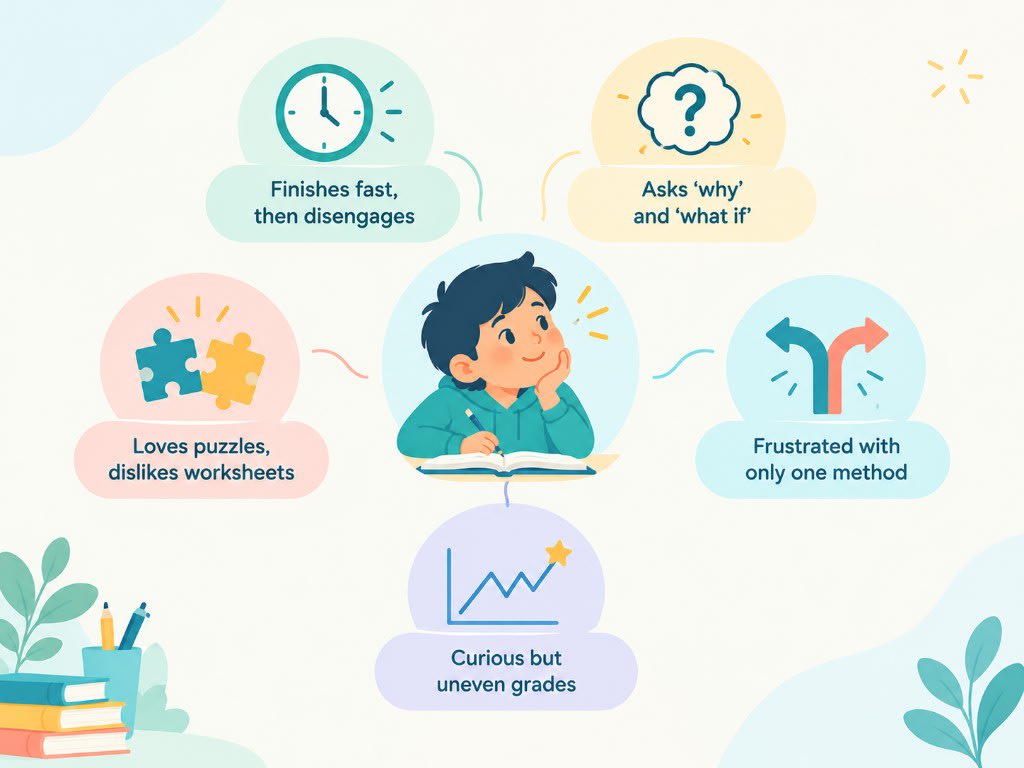
It's easy to focus on report cards, but true indicators of a need for enrichment often lie outside traditional assessments. Many parents overlook these signs, assuming their child is doing fine if grades are acceptable. But if your child is rarely challenged, they might be missing out on developing crucial critical thinking skills and a deeper love for the subject.
Here are key indicators to watch for:
- Finishes Quickly, Then Loses Interest: Your child might complete assignments rapidly but then disengage, appearing bored or restless. They grasp the concepts quickly but find the subsequent repetitive practice tedious.
- Asks "Why?" or "What If?" Questions Beyond the Textbook: A child ready for enrichment isn't content with just how something works; they want to know why it works that way, or what would happen if a variable changed. These questions signal a desire for deeper conceptual understanding.
- Enjoys Puzzles but Dislikes Repetitive Worksheets: If your child lights up at a challenging brain teaser or a complex problem but dreads standard, repetitive practice sheets, it suggests they crave intellectual stimulation and varied approaches to problem-solving.
- Becomes Frustrated When There's No Opportunity to Explore: When a child understands a concept but is limited to a single method or answer, they might express frustration. They want to experiment, try different approaches, and see where their curiosity leads them.
- Strong Curiosity Paired with Uneven Performance: This is a crucial, often overlooked sign. A child may be capable of deeper thinking and show immense curiosity, but their performance on standard school assessments might not reflect this. They might be disengaged by the format or lack of challenge, rather than a lack of understanding.
As parents, we can ask ourselves: "Is my child struggling because they don't understand, or because they aren't being challenged to think deeply?" Good enrichment doesn't simply give a child harder questions; it gives them richer questions that develop curiosity, reasoning, and the ability to explore ideas independently.
Enrichment vs. Catch-Up: Understanding the Core Difference
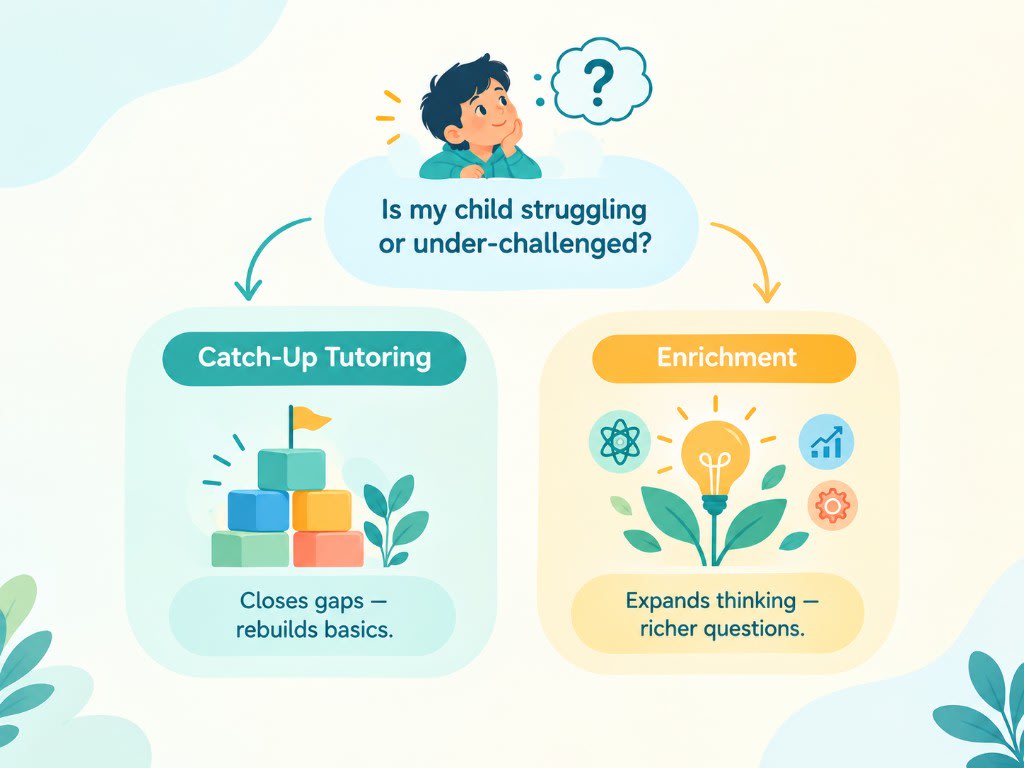
It's vital to differentiate between a child who needs foundational support to catch up and one who needs enrichment to thrive. Both are important, but they address different needs. The key difference lies in why your child is struggling or disengaging.
Catch-Up Tutoring: If a student cannot reliably understand the current schoolwork, consistently misses core concepts, or has significant gaps in their foundational knowledge, they likely need catch-up support. This involves diagnosing those gaps, rebuilding concepts from the ground up, and practicing until the basics are secure. Catch-up tutoring closes gaps.
Enrichment: If your child understands the curriculum but finds it repetitive, finishes quickly, asks deeper "why" or "what if" questions, or enjoys exploring problems beyond the syllabus, they may need enrichment. Their struggle isn't with comprehension but with a lack of intellectual stimulation. Aptitude and curiosity can also appear as persistence with challenging puzzles, experimenting with different solutions, or wanting to understand how and why something works. Enrichment expands thinking.
The gold standard is knowing which one your child actually needs and sometimes, doing both. Our 1:1 online math and science tutoring is paced to your child's stage, allowing us to tailor support whether they need to solidify basics or explore advanced concepts.
Rediscovering the Joy of Learning Through Deeper Exploration
Beyond grades or test scores, effective math and science enrichment for K-12 students helps them rediscover the joy of learning and build a lasting understanding. This is a core goal of Asymptode.
Effective enrichment gives a child permission to explore, rather than constantly asking them to get the "right answer." Imagine a student who found math boring because every lesson felt like another worksheet. They may become deeply engaged when a tutor gives them an unfamiliar problem with multiple possible approaches and asks, "Can you find a different way?"
The important shift is that the child starts asking "What if I try this?" instead of "Which formula do I use?" They begin enjoying the process of figuring something out, even when their first attempt is wrong. This fosters resilience and a growth mindset.
Over time, that curiosity builds deeper understanding because the student is connecting ideas, testing them, and explaining their reasoning rather than memorizing procedures. The real sign of enrichment working is not just a higher grade it is when a child starts choosing to think about the subject even when nobody is asking them to. That's the lasting understanding and joy we aim to cultivate.
Addressing Parent Fears: Enrichment Isn't About Pushing Too Hard
It's natural for parents to have concerns about seeking advanced math or science enrichment. A common fear is that "advanced" enrichment means pushing a child too hard or giving them work far beyond their grade level. Parents may worry it will create undue pressure, make school harder, or is only appropriate for "gifted" children.
At Asymptode, we see enrichment differently: it should deepen thinking, not simply accelerate the syllabus. Our tutors can take a familiar math or science concept and explore the "why," introduce a richer problem, or encourage multiple ways of solving it all without racing ahead of their school curriculum.
Enrichment should also be driven by curiosity and readiness, not labels. A child doesn't need to be "gifted" to benefit from being challenged appropriately. The right enrichment should make a child more curious and capable, not more stressed. Ideally, it should make the regular curriculum feel more meaningful and engaging, not harder.
Key Takeaways: Nurturing a Love for Learning
Recognizing the signs that your child needs math and science enrichment is the first step toward unlocking their full potential. It's about seeing beyond grades and understanding their innate curiosity and desire for deeper engagement. By providing opportunities for exploration and richer questions, we can help children build a lasting understanding and rediscover the joy of learning.
If you see these signs in your child, consider how personalized, 1:1 online tutoring can provide the tailored enrichment they need. Asymptode is here to help your child develop a strong, lasting foundation in math and science, opening up a wider range of academic and career opportunities for their future. Explore our personalized tutoring options today at asymptode.com and give your child the gift of genuine understanding.