
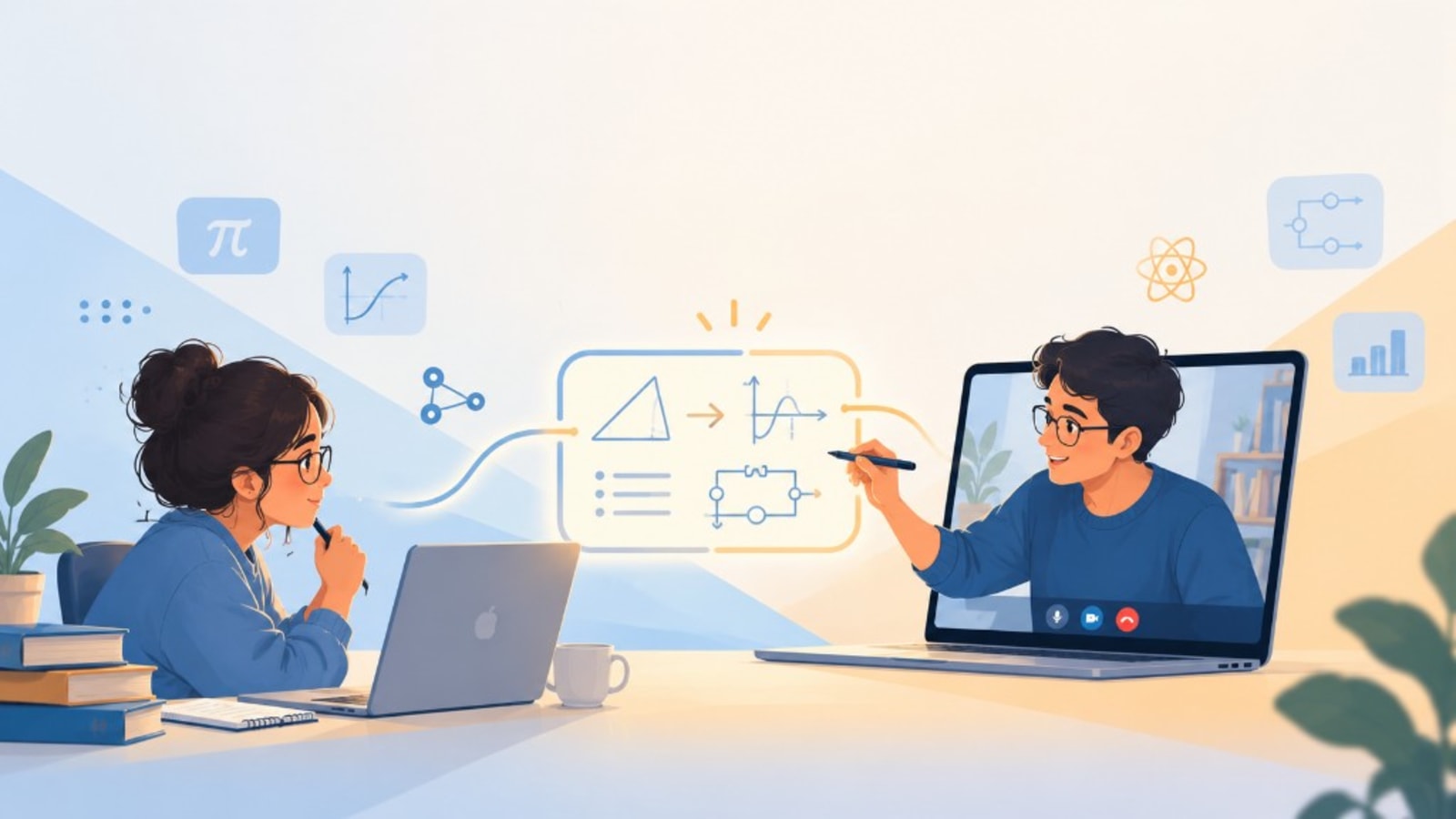
As a parent, you want the best for your child's education. When it comes to challenging subjects like math and science, finding the right support can feel overwhelming. You might be considering tutoring, but perhaps you're skeptical about whether online learning can truly deliver the results your child needs. Many parents share a common concern: can virtual math and science tutoring genuinely be as effective and engaging as in-person instruction?
We understand these worries. The idea of a child learning complex concepts through a screen can seem less personal, less connected, and potentially less effective. But the reality of 1:1 online math and science tutoring, especially when it's designed for active engagement, often surpasses what parents expect. Let's debunk a few common myths.
Myth 1: Online sessions can't build real engagement or connection
A common myth is that online tutoring cannot create the same engagement or connection as sitting beside a child in person. In reality, 1:1 online teaching can be highly engaging when the tutor constantly interacts with the student asking them to explain, predict, draw, solve, and challenge ideas rather than simply watching a lesson.
For example, a student who was hesitant to attempt unfamiliar Physics problems initially relied on formulas and frequently said, "I don't know." Through 1:1 questioning and visual explanations, the student began identifying what was physically happening before choosing an equation. The real "aha!" was when they faced a new problem and said, "Let me draw it first." That small change is powerful: the student was no longer waiting for the tutor to show the method they had developed their own way of thinking.
The proof that online tutoring works isn't screen time or completed lessons; it's what the student can do independently when the tutor stops helping.
Myth 2: Screen time means passive learning
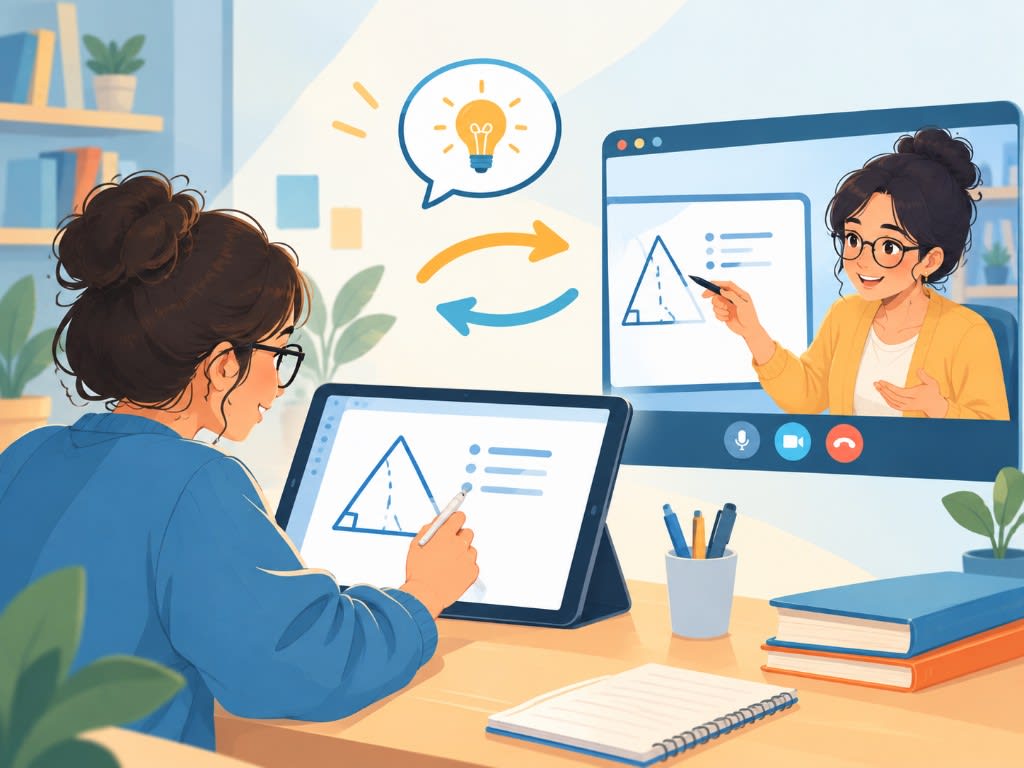
The key is to make the student do the thinking, not just watch the tutor teach. In a 1:1 session, tutors constantly use questioning, prediction, screen-sharing, digital whiteboards, diagrams, and live problem-solving so the student is explaining and working alongside them.
For example, in Physics, instead of explaining a circuit and then giving questions, the tutor might show a new circuit and ask, "What do you predict will happen if we change this?" The student draws, explains their reasoning, tests the idea, and then revises it if needed. The tutor also watches how the student arrives at an answer, not just whether it's correct, and immediately changes the explanation when confusion appears.
The online format becomes an advantage when the screen is a shared workspace not a screen the child simply watches.
Myth 3: In-person is inherently more personalized
The biggest pedagogical advantage of online 1:1 teaching is real-time adaptability. The tutor can slow down, change the explanation, use a diagram or simulation, or increase the challenge instantly based on the student's response.
For Maths and Science, the shared screen also becomes an interactive workspace students can draw models, annotate problems, manipulate visual representations, and solve alongside the tutor rather than simply listen. The tutor can immediately see how the student is thinking and address a misconception before it becomes a habit. Online also makes it easier to bring different representations of the same concept into one session visual, mathematical, verbal, and practical without interrupting the learning flow.
So the advantage isn't that online is more convenient; it's that 1:1 technology makes personalized teaching more responsive, visible, and dynamic.
Myth 4: Students are just learning tricks to pass tests
A good example is a student who could memorize Physics formulas but became stuck whenever a circuit problem was presented differently from the textbook. In a 1:1 online session, the tutor used the shared screen to draw the circuit, annotate it live, and ask the student to predict what would happen before introducing any equation. The student could immediately change the diagram, test their reasoning, and explain why their prediction changed when the circuit changed.
The breakthrough came when the student stopped asking, "Which formula do I use?" and started saying, "Let me draw it and see what is happening." The online environment made it easy to move between diagrams, explanations, questions, and unfamiliar examples in real time, turning a memorized procedure into a mental model the student could reuse independently.
What to actually look for in online tutoring
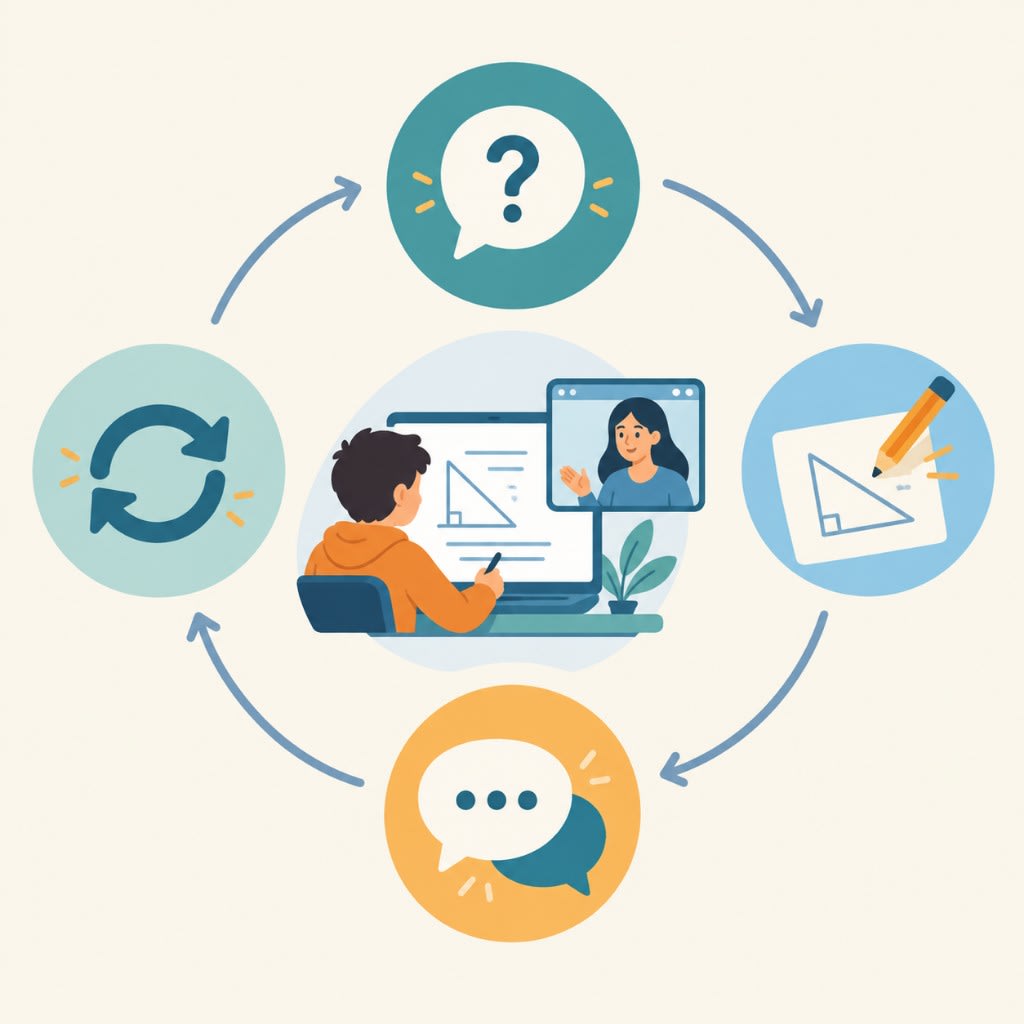
If you're weighing options, the format matters less than what happens inside the session. Look for:
- The student doing the talking. In a good session, your child is explaining, predicting, and drawing more than they're listening.
- A shared workspace, not a shared screen. A whiteboard or annotation tool the student actively uses is very different from a tutor just presenting slides.
- Real-time adjustment. A tutor who changes pace, explanation, or difficulty based on what your child just said or did not one running through a fixed script.
- Evidence of independent thinking. Ask what your child can do without the tutor's help after a few sessions. That's a better signal than a completed workbook.
The bottom line
Online 1:1 math and science tutoring can be just as engaging as in-person instruction often more so when it's built around active questioning, shared digital tools, and real-time adaptability. The format isn't the thing that determines whether learning sticks; what happens inside the session is. When a student moves from "which formula do I use?" to "let me draw it and see what's happening," that's what lasting understanding looks like, whether it happens across a table or across a screen.
Ready to see active, personalized 1:1 online tutoring in action? Explore Asymptode's math and science tutoring at asymptode.com.