

As parents, we all want our children to succeed especially in demanding subjects like high school math and science. When a child struggles, the instinct is to find help. But a common question comes up first: can online tutoring really match in-person, especially for something as complex as physics or advanced algebra?
It's a fair concern, often rooted in the belief that being in the same room matters for deep learning. But the real answer isn't about physical location it's about the quality of the interaction.
Beyond the Screen: How Online Tutoring Fosters Deep Engagement
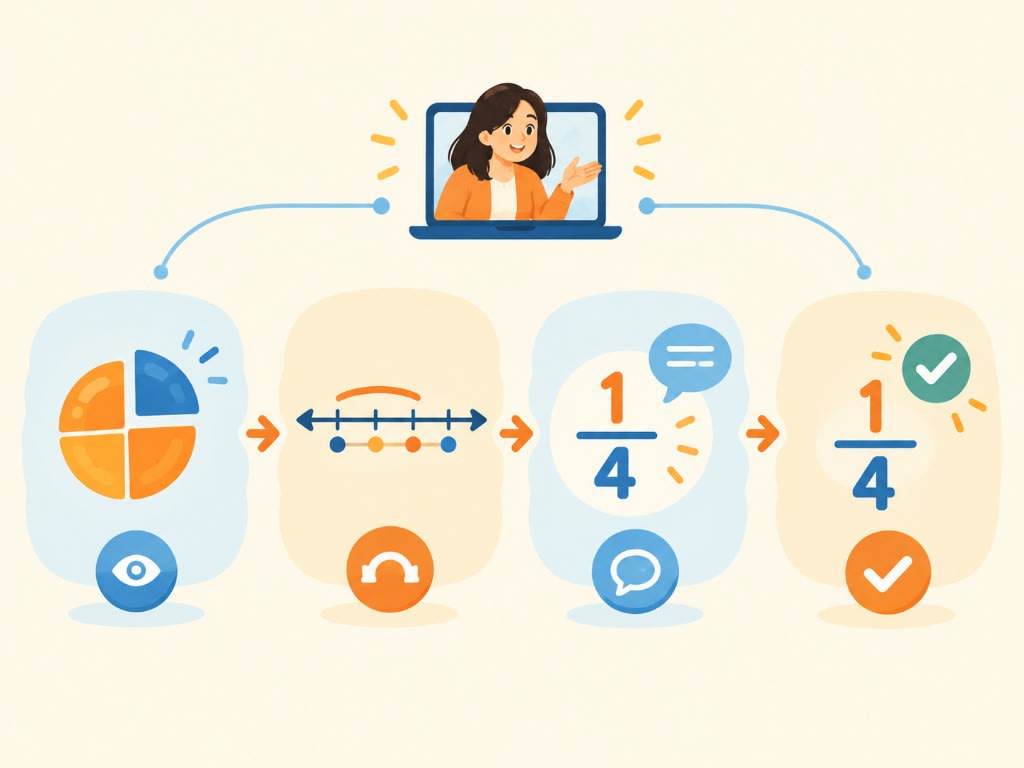
The real question isn't whether a lesson happens online or in person it's how deeply the tutor can observe and respond to the student's thinking. In a 1:1 online session, a skilled tutor uses a shared digital whiteboard, diagrams, graphs, screen annotation, and visual simulations to build an interactive, responsive environment while continuously asking the student to explain why they chose an approach.
If a student gets a physics problem wrong, an effective tutor doesn't just show the correct solution. They ask the student to draw the situation, explain what they think is happening, and then shift the representation or example the moment a misconception becomes clear. Because it's one-to-one, the tutor can slow down, switch explanations, or raise the challenge immediately.
The strongest evidence of engagement is what the student does not whether they're sitting in the same room. When a student starts asking better questions, explaining concepts independently, and tackling unfamiliar problems without waiting for help, that's meaningful learning happening online.
The Precision Advantage: Catching Up and Getting Ahead
For a student genuinely struggling with a specific concept, the biggest advantage of 1:1 online tutoring is precision. Rather than reteaching an entire chapter, a dedicated tutor can quickly pinpoint exactly where the student is stuck and work backward to the missing foundation. Digital tools graphs, interactive diagrams, simulations, shared problem-solving, real-time annotation make difficult ideas visible and tangible.
Online tutoring also removes geography from the equation. A student struggling with a specific area of physics or advanced math can work with a tutor who's genuinely strong in that exact area. The pace stays fully individual: slow down where needed, move ahead where the student is ready.
The same 1:1 model can help a student catch up and then get ahead — not by rushing through content, but by repairing the right gaps and gradually raising the challenge.
Pedagogy First: What Makes Online Tutoring Truly Effective?
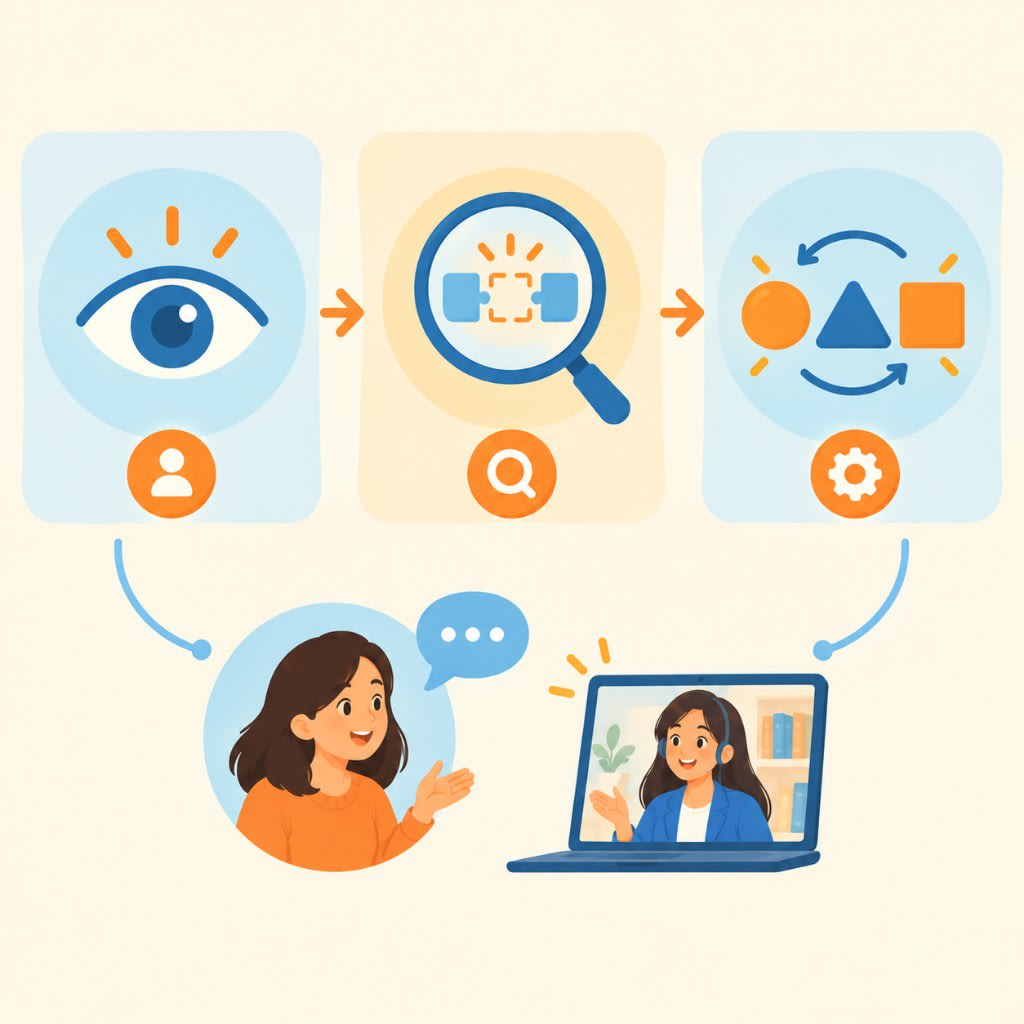
The most important factor isn't any single platform feature it's the quality of the teaching loop: diagnose the gap → teach it clearly → check understanding immediately → adapt based on the response. Tools like an interactive whiteboard, live annotation, graphs, and shared problem-solving matter because they make the student's thinking visible, letting the tutor catch and correct misconceptions in real time.
Personalized pacing matters just as much. A student shouldn't spend an hour practicing what they already know, or get pushed past a concept before it's mastered. Recorded sessions let students revisit a tricky explanation later, and regular feedback keeps both progress and remaining gaps visible to student and parent alike.
Technology should support the pedagogy not replace it. Real improvement comes when the platform helps a skilled tutor understand the student's thinking, respond immediately, and move them steadily toward independent problem-solving.
Online Tutoring vs. Online High School Programs: A Key Distinction
It's worth separating targeted 1:1 tutoring from full online high school programs, which dominate most search results. A full online program is built to deliver a curriculum what to learn, in what order, through structured lessons and assessments.
1:1 tutoring starts from the opposite direction: where is this particular student getting stuck, and why? Two students might both struggle with quadratic equations one because of a weak algebra foundation, the other because they understand the math but can't translate word problems into equations. A 1:1 tutor diagnoses that difference, repairs the specific gap, adjusts the explanation, and returns to the current curriculum adjusting pace and support minute to minute.
The distinction is curriculum delivery vs. individualized teaching. A program provides structure; 1:1 tutoring makes the learning journey responsive to the individual child building understanding that transfers to unfamiliar problems, not just more completed content.
Key Takeaways
- Deep engagement tutors observe and respond to thinking in real time using interactive tools
- Precision learning targeted intervention finds and fixes the actual gap, not the whole chapter
- Expert access students connect with subject specialists regardless of location
- Adaptive pacing the child's speed sets the pace, not the other way around
- Measurable improvement the teaching loop, not the platform, drives lasting gains
If your child is struggling with high school math or science, the medium matters far less than the methodology. Asymptode's 1:1 online tutoring is built around exactly this kind of responsive, personalized teaching loop.
Explore Asymptode's 1:1 Tutoring.