
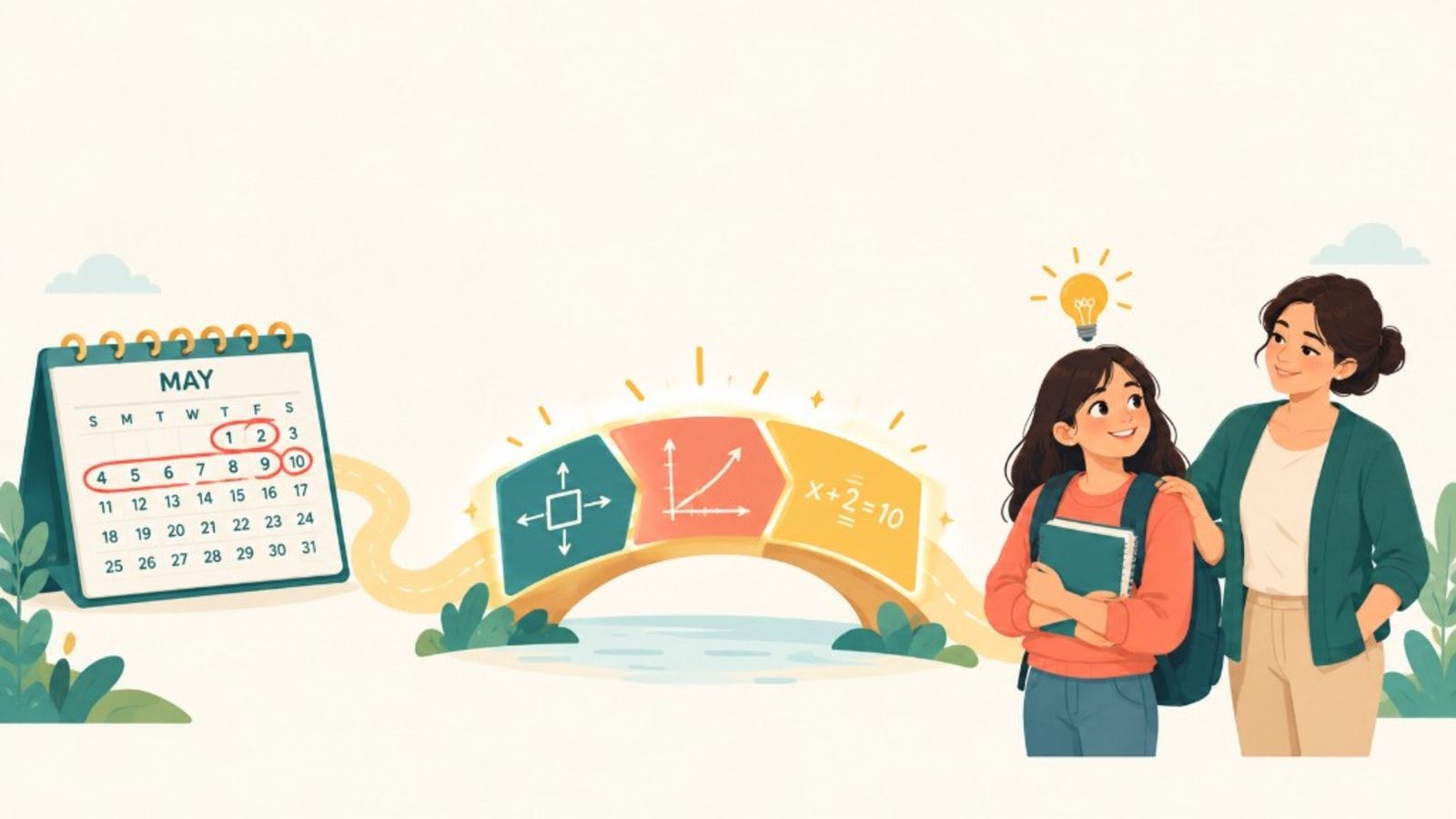
The exam dates tell you when. They don't tell you how to be ready.
The 2027 AP exams run May 3-7 and May 10-14. You can check the exact day and session for your child's exams on the official AP Central exam dates page, and your school's AP coordinator can confirm local start times.
Once the dates are on the calendar, the harder question starts: how do we use the months between now and then? If you've felt a quiet worry that your child is studying a lot but not necessarily understanding the material, this post is for you.
Why memorizing runs out
Many students prepare by memorizing as many facts, formulas, and problem types as they can. That works when a question looks familiar. It breaks when the numbers, wording, diagram, or context changes, and on AP exams they usually do.
The difference is transfer. A student who has memorized can do well on questions that look like ones they've seen. A student who understands the concept can reason from the underlying principle even when the question is new.
Take two AP Physics students who have both memorized the equations of motion. Faced with an unfamiliar scenario:
- Student A hunts for the formula that "looks right" and can't decide which one applies.
- Student B first asks: What is physically happening? What do I know? What principle connects these quantities? They draw the situation, identify the relationship, and then choose the equation.
When the question changes, the first approach can fall apart. The second gives the student a way through. Memorization helps you recall. Understanding helps you reason when recall isn't enough.
The misconception: more study hours means more understanding
A common belief is that a high AP score comes from covering more material and doing as many practice questions as possible. Long study hours, finished chapters, stacks of flashcards, and frequent full practice tests start to look like progress.
But students can become very good at recognizing familiar patterns without understanding the concept underneath. They freeze when a question is worded differently or combines two ideas.
A better approach is depth before volume: learn the concept, explain it in your own words, apply it in different contexts, analyze mistakes, and only then return to timed practice. The question to ask shifts from "How much did we study?" to "What can my child now understand and do independently that they couldn't before?"
Turn the schedule into a roadmap
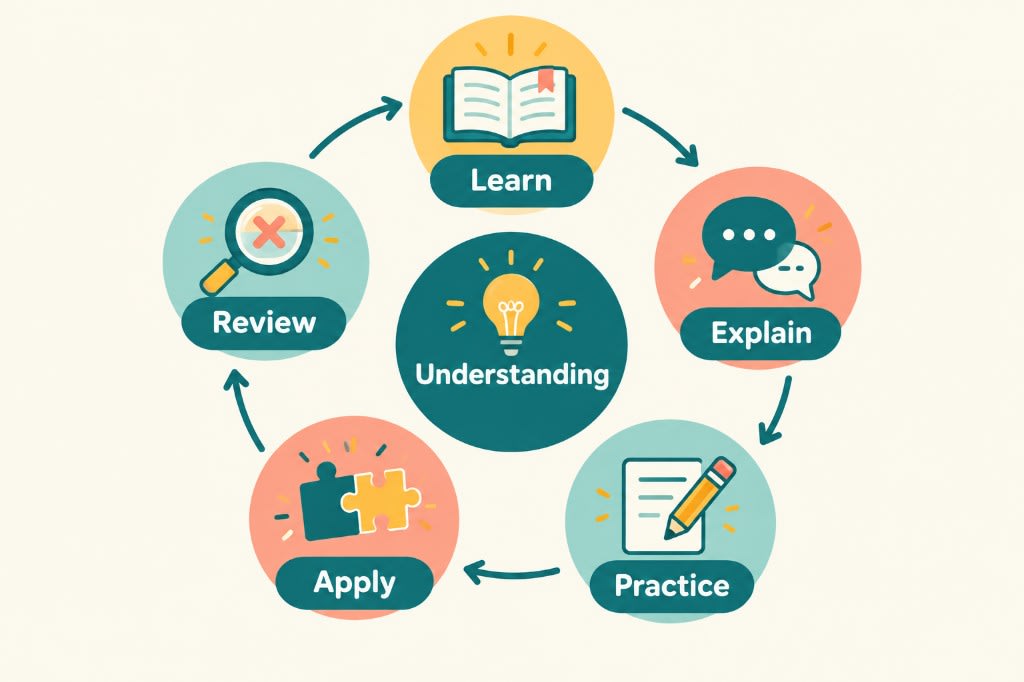
Treat the exam date as the destination, not the study plan. Here's how to turn it into milestones:
- Start with the end date. Mark the exam and work backward. Reserve the final weeks for integration, timed practice, and review, not for learning major concepts from scratch.
- Map the major concepts. Break the course into foundational ideas and note which depend on others. Diagnose what your child understands now before deciding how much time each area needs.
- Build learning cycles. For each concept: learn, explain, practice, apply to an unfamiliar problem, then review mistakes.
- Add checkpoints. Every few weeks, see whether your child can explain and apply earlier concepts without prompts. If not, adjust the roadmap instead of blindly following the calendar.
- Use the final phase differently. As the exam nears, shift from individual topics to connecting them: mixed problems, timed practice, and recurring weak spots.
The key is to work backward from the exam date but forward from your child's actual understanding. That turns a calendar into a responsive roadmap rather than a countdown.
Common pitfalls
- Counting hours instead of progress. Ask what's newly understood, not how long they sat.
- Taking full practice tests too early or too often. They show what's wrong but don't fix it.
- Reviewing only the problems they got right. Mistakes are where the learning is.
- Saving all the hard concepts for the last month. Cramming new material late leaves no time to absorb it.
A quick illustration
(A hypothetical example, not a real client story.) Picture an AP Physics student who relies on memorized formulas and shortcuts. She does fine on familiar practice questions, but when the wording changes she can't tell which formula to use, and she starts to feel she's "just not a Physics person."
The turning point is changing the order of thinking. Before touching an equation, she explains what's physically happening, what's known, what needs to be found, and which principle connects them. With diagrams, predictions, simpler versions of the problem, and prompts removed gradually, she stops asking "which trick goes with this question?" and starts asking "what's happening here?" Over time she begins catching her own mistakes instead of waiting for the next hint. The higher score matters, but the bigger change is in how she thinks: "I understand what's happening, so I can figure out what to do."
Key takeaways
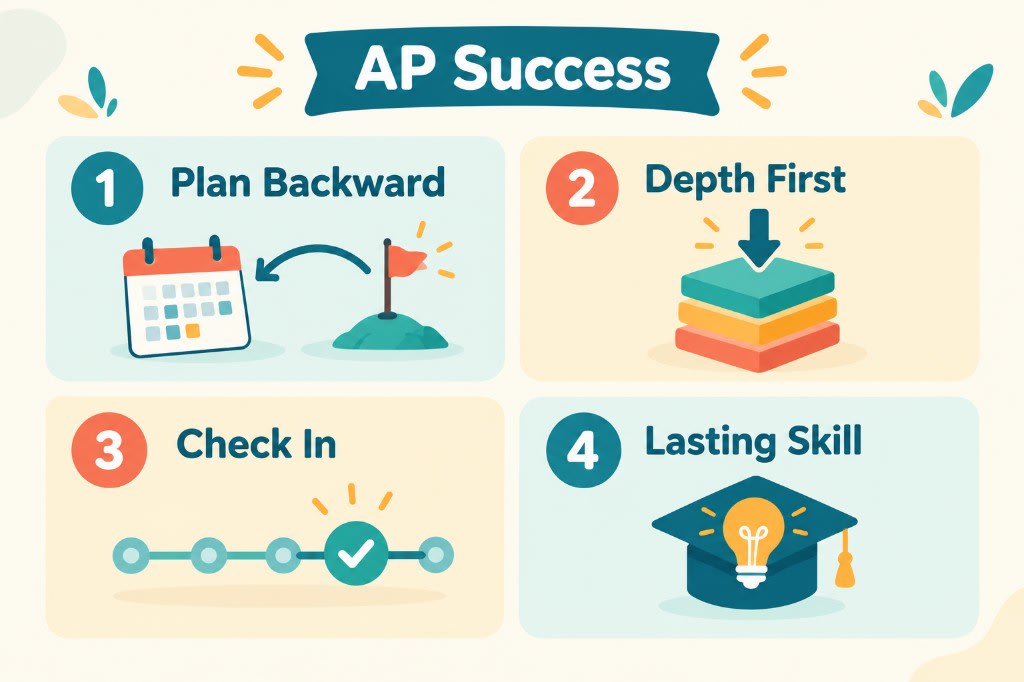
- The date is the destination, not the plan. Work backward from the exam and forward from your child's real understanding.
- Depth before volume. Explaining and applying beats re-reading and re-drilling.
- Checkpoints beat calendars. Adjust the plan when understanding lags.
- Conceptual mastery lasts. It supports exam day, college coursework, and beyond.
Want help finding where your child's understanding is solid and where the gaps are? Book a free consultation with Asymptode. Our 1:1 online math and science tutors pace lessons to your child's stage and focus on real understanding.