

For many parents, the journey to AP exam success begins with a simple search: "AP exam schedule." Knowing the dates is essential but marking your calendar is just the first step, and treating it as the whole plan is often the biggest mistake in building a truly effective preparation strategy.
As a concerned parent, you want your child to genuinely understand math and science concepts, not just memorize for a test. You want them to build a strong, lasting foundation that opens doors to future academic and career opportunities. This guide is about moving beyond the basic schedule and building a strategic, evidence-based roadmap that gets your child truly ready not just on paper, but in understanding.
The Trap of the "Calendar Fill": Why Knowing the Schedule Isn't Enough
A common mistake is working backward from the AP exam date and simply filling the calendar with chapters, homework, and practice tests. That creates a schedule, but not necessarily a learning strategy. It can also lead to rushing through difficult concepts near the end, because the plan was built around completing content rather than mastering it.
The key question for parents isn't just "Have we covered everything before the exam?" but "Which concepts does my child need to truly master, and how will we know they have mastered them?" The exam date should be the destination not the entire strategy.
Instead, start much earlier with a diagnosis of your child's current understanding, foundations, and goals. From there, work backward from the exam: identify the highest-impact gaps, decide which concepts need deep teaching versus independent practice, and build regular checkpoints to see whether your child can actually apply what they've learned. The roadmap becomes a living document, adjusted based on evidence not a fixed, unyielding plan.
Beyond Academics: Navigating the Emotional and Logistical Hurdles

AP preparation brings real emotional and logistical pressure for both students and parents and one of the biggest challenges is the pressure parents can unintentionally add.
Consider a parent who noticed their child falling behind and responded with more study hours, more practice questions, and frequent reminders. The intention was entirely well-meaning, but the student began associating AP work with stress and started avoiding it. That's a cycle of anxiety and resistance that undermines effective learning.
A better approach is to reduce pressure while increasing clarity:
- Instead of constantly asking "How much have you finished?", agree on a realistic weekly plan with protected breaks.
- Identify the two or three highest-priority goals for the week.
- If working with a tutor, let them flag where additional effort is actually needed.
- Focus your own energy on creating a calm environment, protecting sleep and downtime, and recognizing effort and progress not just scores.
The important shift is from "We need to do more" to "We need to use our time and energy better." A sustainable AP plan should challenge the student without making every day feel like an exam.
From Cramming to Concept: Building True Mastery in AP Math & Science
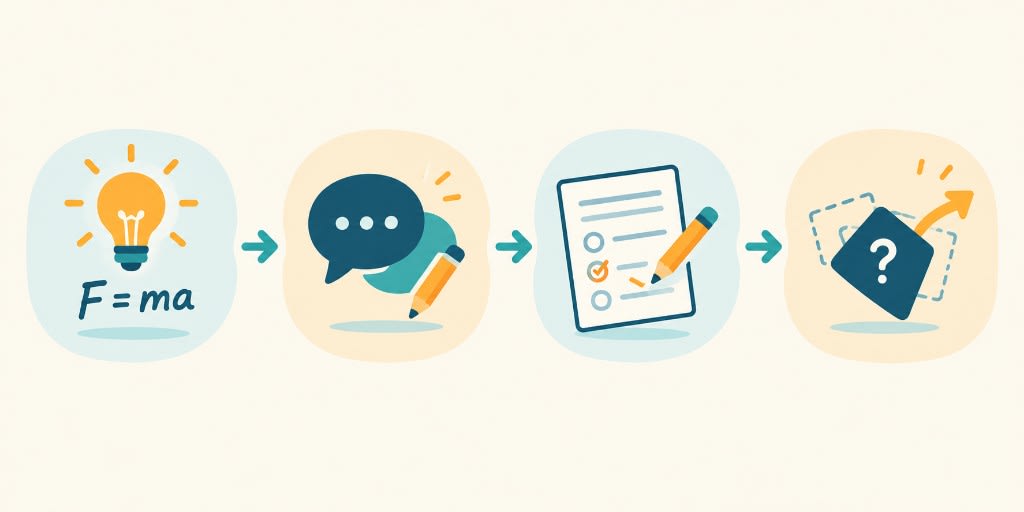
Many parents worry their child is just memorizing for the exam, especially in demanding subjects like AP Calculus or Physics and that concern is valid. There's a real difference between exam readiness and mastery.
Exam readiness means a student can recognize common question types, apply the required methods, and manage the exam format. Mastery goes further: the student understands why the method works, knows when to use it, and can apply the idea even when a question looks unfamiliar. For AP Calculus or Physics, that distinction matters because memorized formulas work on familiar questions but break down when the context changes.
A concrete strategy: concept → explain → apply → transfer.
- Concept learn the underlying idea, not just the formula.
- Explain have your child explain it in their own words and predict what should happen.
- Apply solve standard AP-style questions.
- Transfer tackle a deliberately unfamiliar problem that needs the same concept in a different form.
Then review the reasoning behind mistakes rather than simply correcting the answer. In Physics, instead of "Which formula do I use?", encourage your child to ask: "What is physically happening? What do I know? What am I trying to find? Which principle connects them?" That mindset prepares students for the exam while building understanding that lasts well beyond it.
Beyond the Score: How Strategic Prep Unlocks Future Opportunities
Strategic AP preparation does more than help a student perform well on one exam. It builds strong academic foundations, independent problem-solving, and the ability to learn difficult material efficiently habits a last-minute approach rarely has room to develop.
Consider a student preparing for AP Physics who initially focused on memorizing formulas. Through a longer, more strategic process, the student began working from physical intuition instead: drawing situations, identifying relationships, explaining assumptions, and testing ideas on unfamiliar problems. Over time, they grew comfortable approaching problems without immediately knowing the exact method a skill that carried into other quantitative subjects and made new material far less intimidating.
The unexpected benefit is often not the AP score itself, but the shift in how the student learns from "What do I need to memorize for this test?" to "How do I understand this well enough to figure out something I've never seen before?" That intellectual independence is what supports future coursework, university-level learning, and a wider range of academic and career opportunities.
Key Takeaways
- Strategic planning over calendar filling: build a plan based on diagnosis, mastery, and flexible adjustment not just dates.
- Support, not pressure: protect downtime, set realistic weekly goals, and recognize effort over scores.
- Mastery through understanding: prioritize why a method works over memorizing what to do.
- Long-term vision: treat AP prep as an investment in foundational skills and future independence, not a one-time hurdle.
Your child's AP journey is a chance to build more than exam readiness it's a chance to build real, lasting understanding. By focusing on strategic preparation, true mastery, and emotional well-being, you can set them up for confidence that lasts well beyond the exam.
Ready to build a personalized AP prep strategy for your child? Book a free consultation to learn more about Asymptode's 1:1 online tutoring.