

As a parent, you want nothing more than for your child to succeed in math and science. You dream of them genuinely understanding complex concepts, building confidence, and enjoying learning rather than just memorizing for tests. But when your child struggles, finding the right support can feel overwhelming. You worry about generic tutors who follow a script, or whether online tutoring can truly be effective. How do you find a tutor who can genuinely connect with your child's unique learning style and help them overcome specific hurdles?
It's not just about subject knowledge or basic experience. The real differentiator lies in a tutor's commitment to meaningful professional development not the general teacher training you might see discussed in broad educational contexts, but specialized, ongoing learning that directly impacts how a tutor diagnoses, adapts, and ultimately empowers your child.
What Meaningful Professional Development Actually Looks Like
When parents hear "professional development," their minds might drift to generic teacher training. But for a math or science tutor, it's far more targeted: it's about learning how to better diagnose and respond to how a particular child thinks.
That can mean training in misconception and error analysis, Socratic questioning, or guided discovery techniques. It means applying cognitive-load principles to make complex topics digestible, and mastering strategies for students with different learning needs — including things like dyscalculia or other specific learning challenges. It also means learning to use digital whiteboards, simulations, and visual tools effectively, not as technology for its own sake, but specifically when a different representation will unlock understanding.
For example, if a student repeatedly uses the wrong physics formula, a well-trained tutor doesn't just correct them. They investigate why the student chose that formula, identify the underlying misconception, and switch from abstract formulas to diagrams or physical reasoning to build real understanding. Good professional development prevents a tutor from following a generic script it gives them more ways to diagnose, adapt, and ultimately make the student independent.
How Specialized Training Changes a Student's Trajectory

Parents often fear their child will get lost in the crowd, or be handed shortcuts instead of true understanding. This is where a tutor's specialized training makes a real difference it lets them look past surface-level mistakes to the core of the problem.
Take a student who kept making errors in algebra, despite being able to recite the procedures. A tutor trained in error analysis and learning differences looked past the wrong answers and noticed the student wasn't struggling with math ability they were struggling to organize multi-step reasoning. Instead of assigning more practice, the tutor broke problems into smaller decisions, used visual representations, and gradually removed the scaffolding.
The turning point came when the student started explaining each step and catching their own errors before the tutor had to step in. The specialized training changed the tutor's diagnosis, which changed the teaching and the child moved from "I'm bad at math" to "I know where I went wrong, and I can fix it."
Three Questions to Vet a Tutor's Expertise
Beyond basic experience or subject knowledge, here are three questions that reveal whether a tutor genuinely invests in their craft along with the green flags to listen for.
"What have you learned recently that has changed how you teach math or science?" Green flag: They can name a specific method, training, research insight, or tool and explain how it changed their actual teaching, not just their credentials.
"When a student keeps getting the same type of question wrong, how do you figure out what's actually causing the mistake?" Green flag: The answer involves error analysis, diagnostic questioning, and checking foundational concepts not simply assigning more practice problems.
"How do you adapt your teaching when your usual explanation isn't working?" Green flag: They describe switching between diagrams, physical intuition, verbal reasoning, worked examples, guided discovery, or technology, based on how the student responds in the moment.
The biggest green flag across all three: specificity. A genuinely developing tutor can explain not just what they know, but how their learning has tangibly changed what they do with an individual child.
Why Asymptode Prioritizes Ongoing Tutor Growth
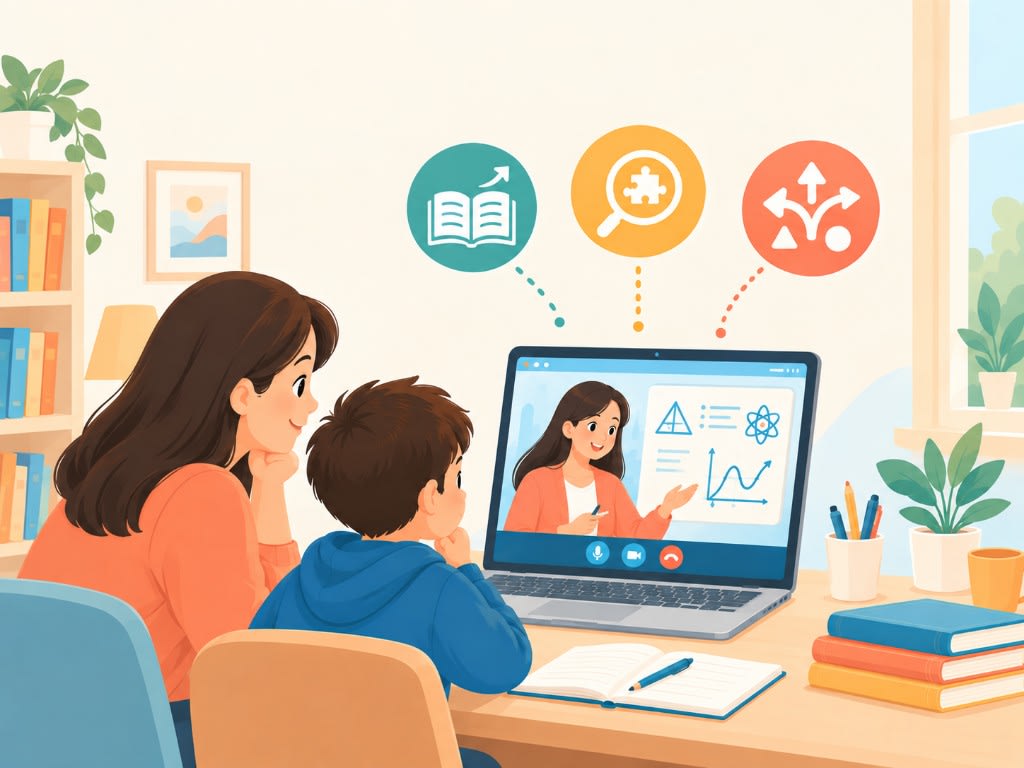
At Asymptode, we understand the concern about finding a truly qualified tutor. That's why our approach goes beyond standard hiring practices we treat continuous, specialized professional development as essential, not optional, for delivering personalized, adaptive learning. Our tutors are trained to diagnose underlying misconceptions, employ varied pedagogical strategies, and adapt to your child's unique learning pace and style, so they build genuine understanding and regain confidence in math and science.
Key Takeaways
- Meaningful PD is specialized it's about diagnosing individual student thinking, not generic teaching.
- It transforms learning specialized training helps tutors identify root causes of errors, leading to genuine understanding.
- Ask the right questions about recent learning, error diagnosis, and adaptive teaching methods.
- Specificity is the tell a truly qualified tutor can explain how their own learning has changed their teaching for your child.
Don't let your child fall further behind with generic tutoring. Explore how Asymptode's highly qualified tutors can make a real difference in your child's math and science journey, and schedule an initial assessment today.